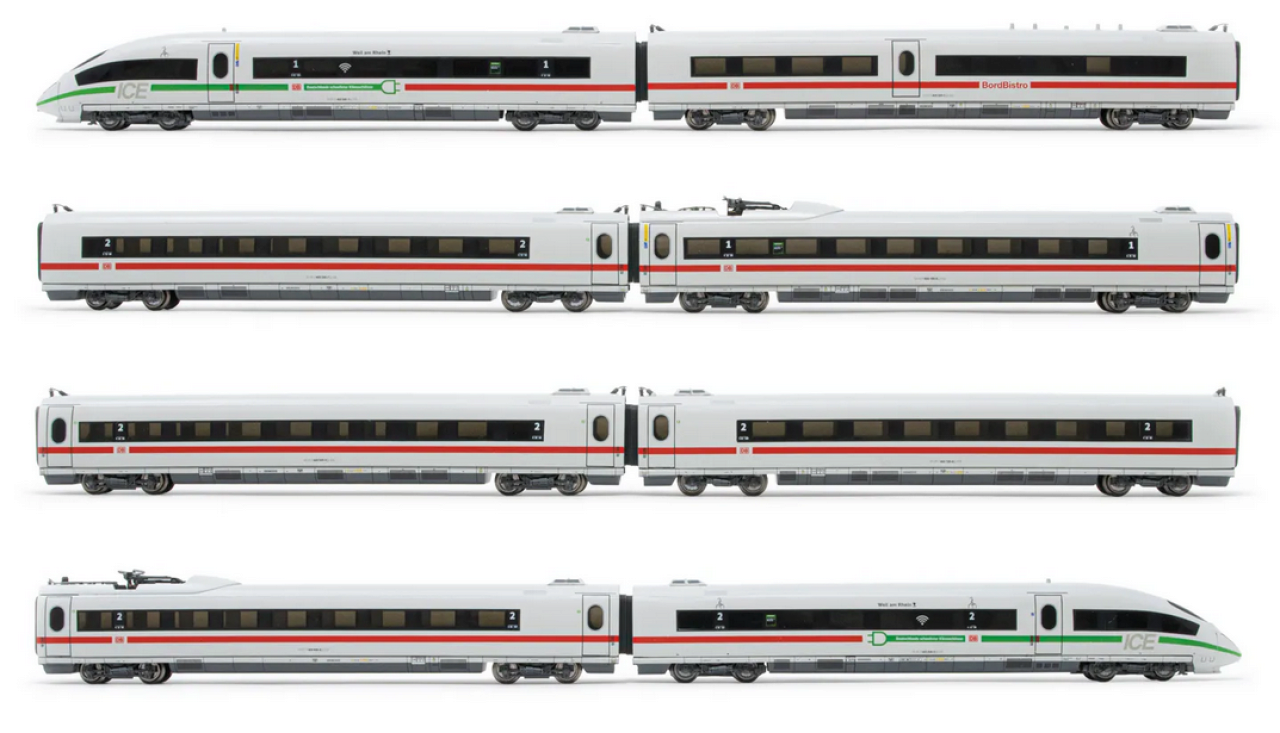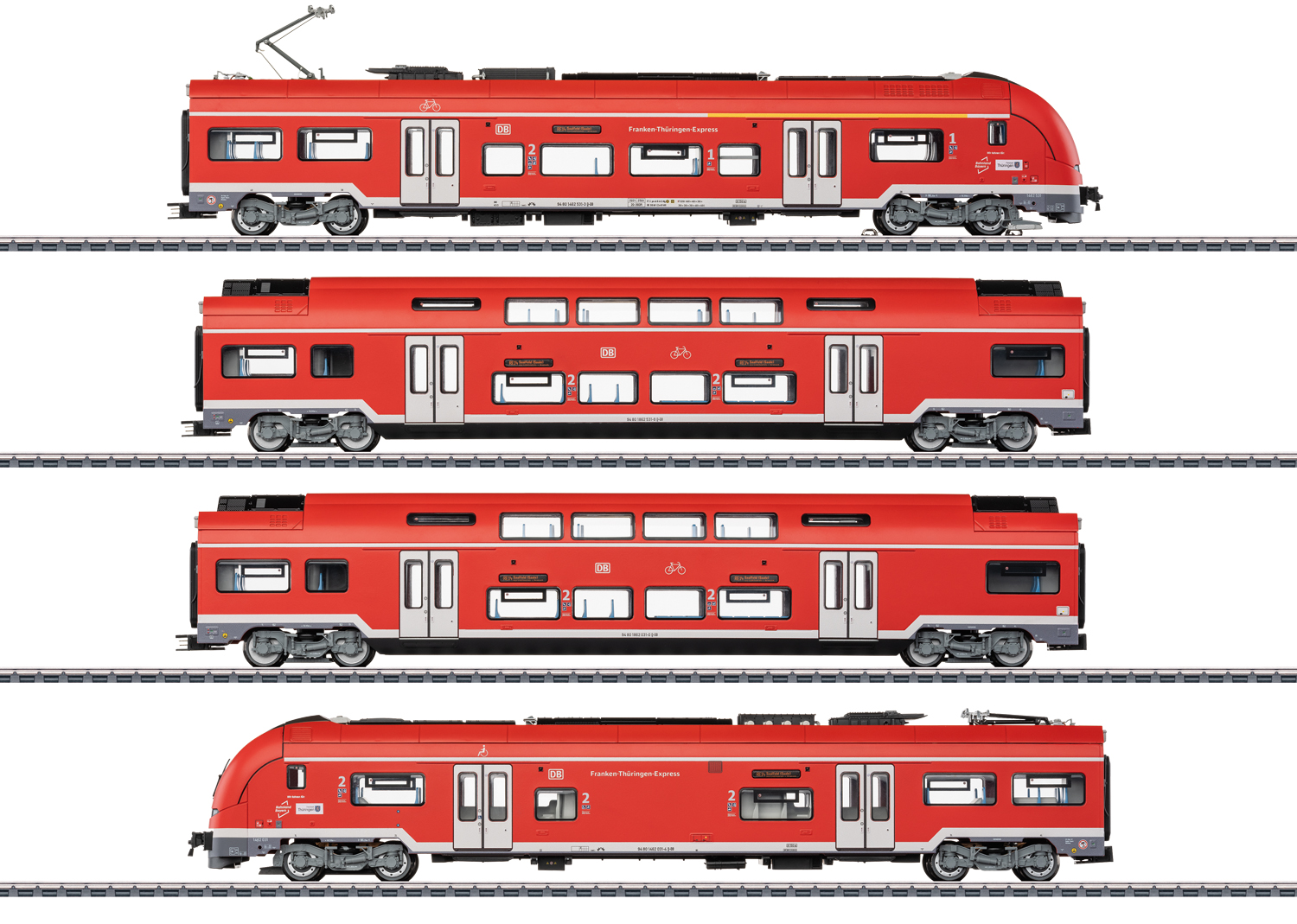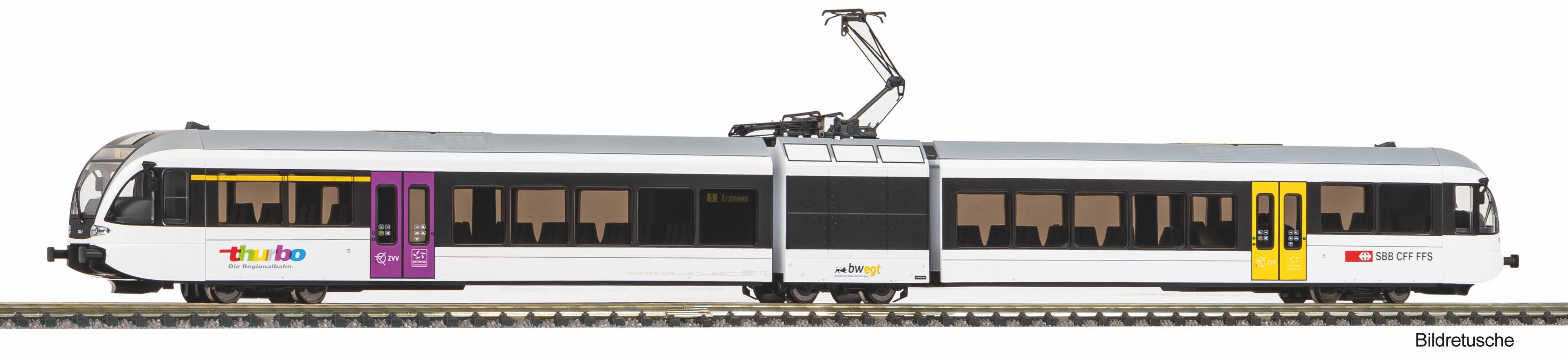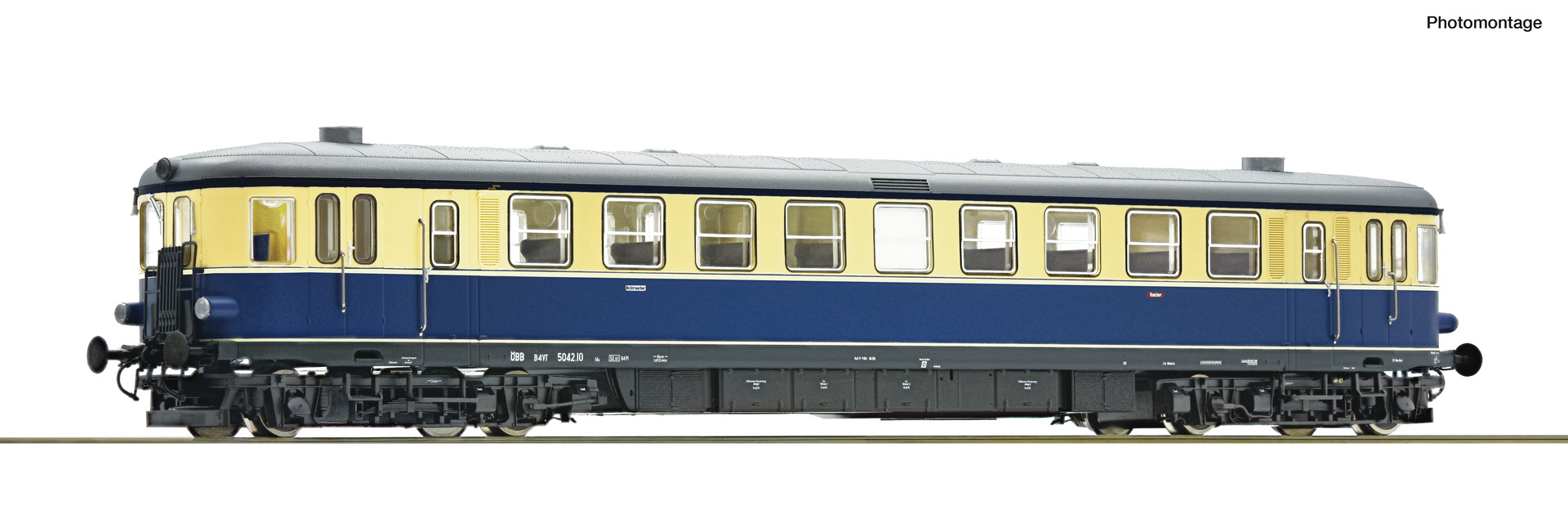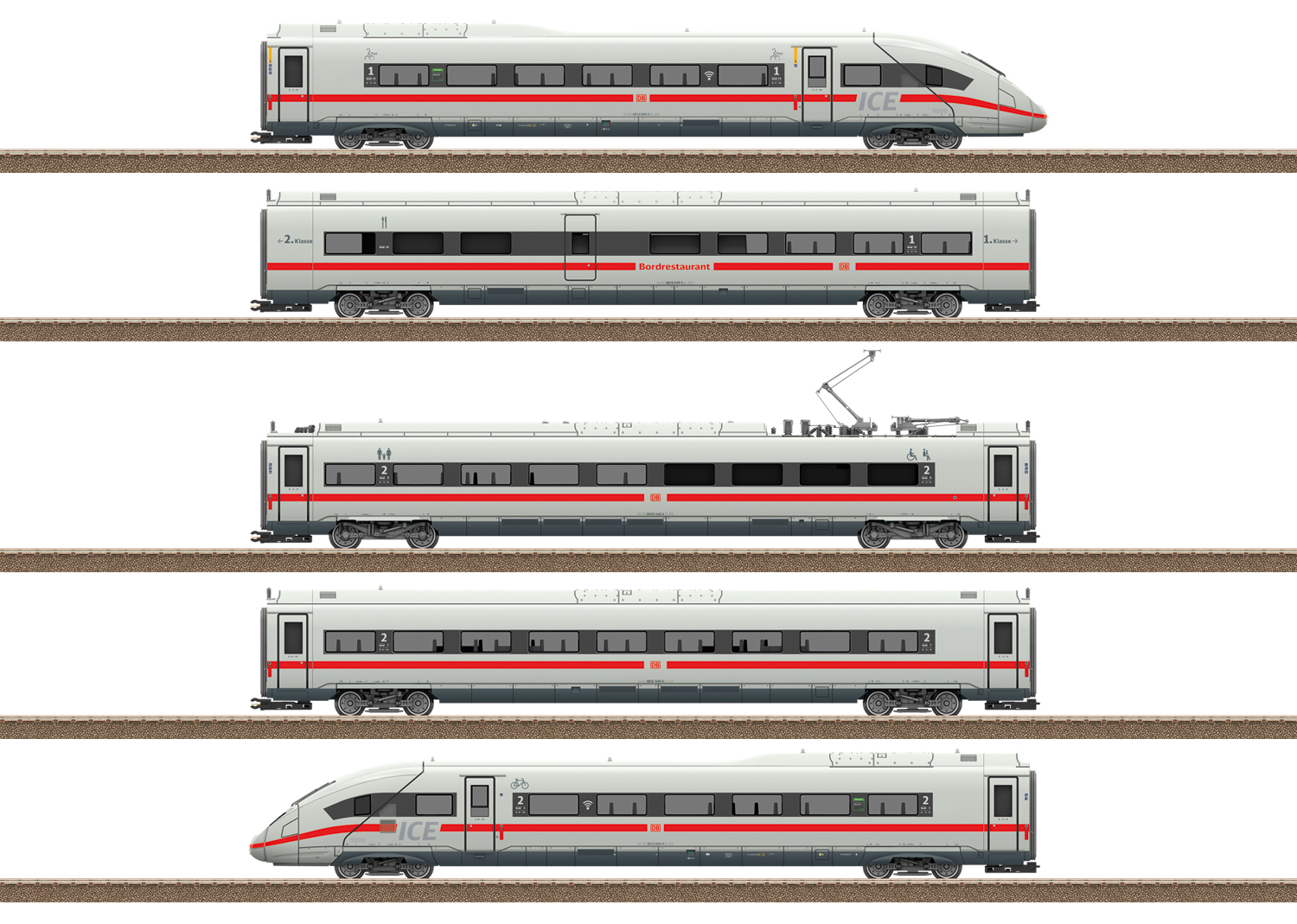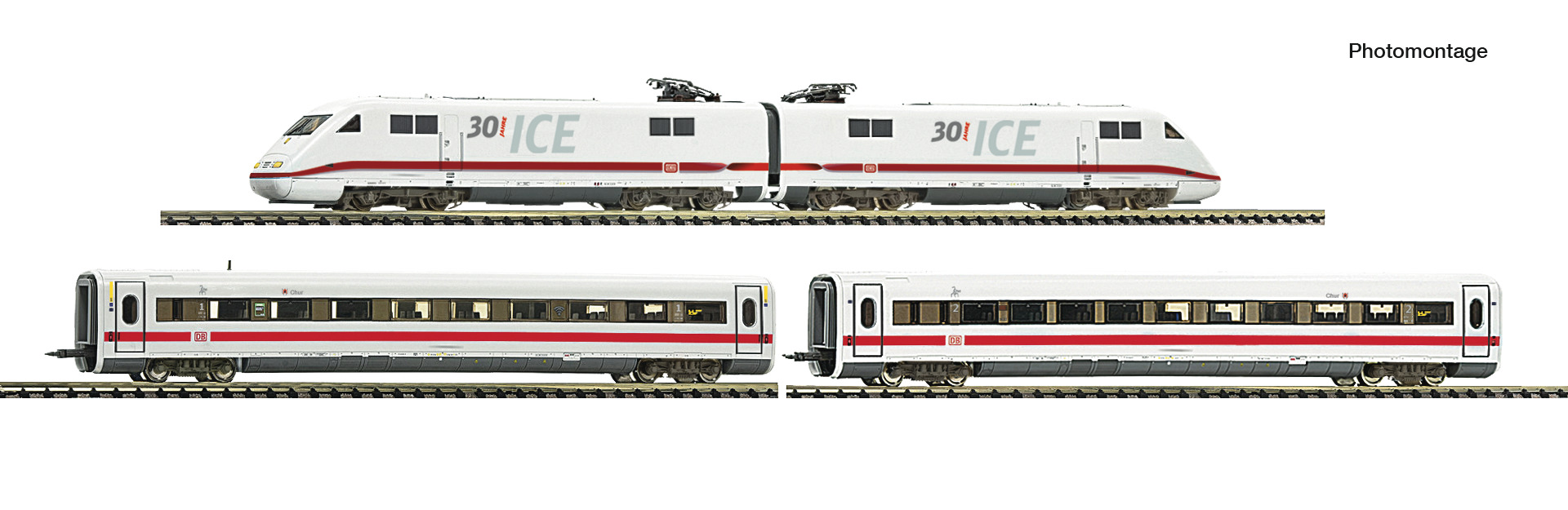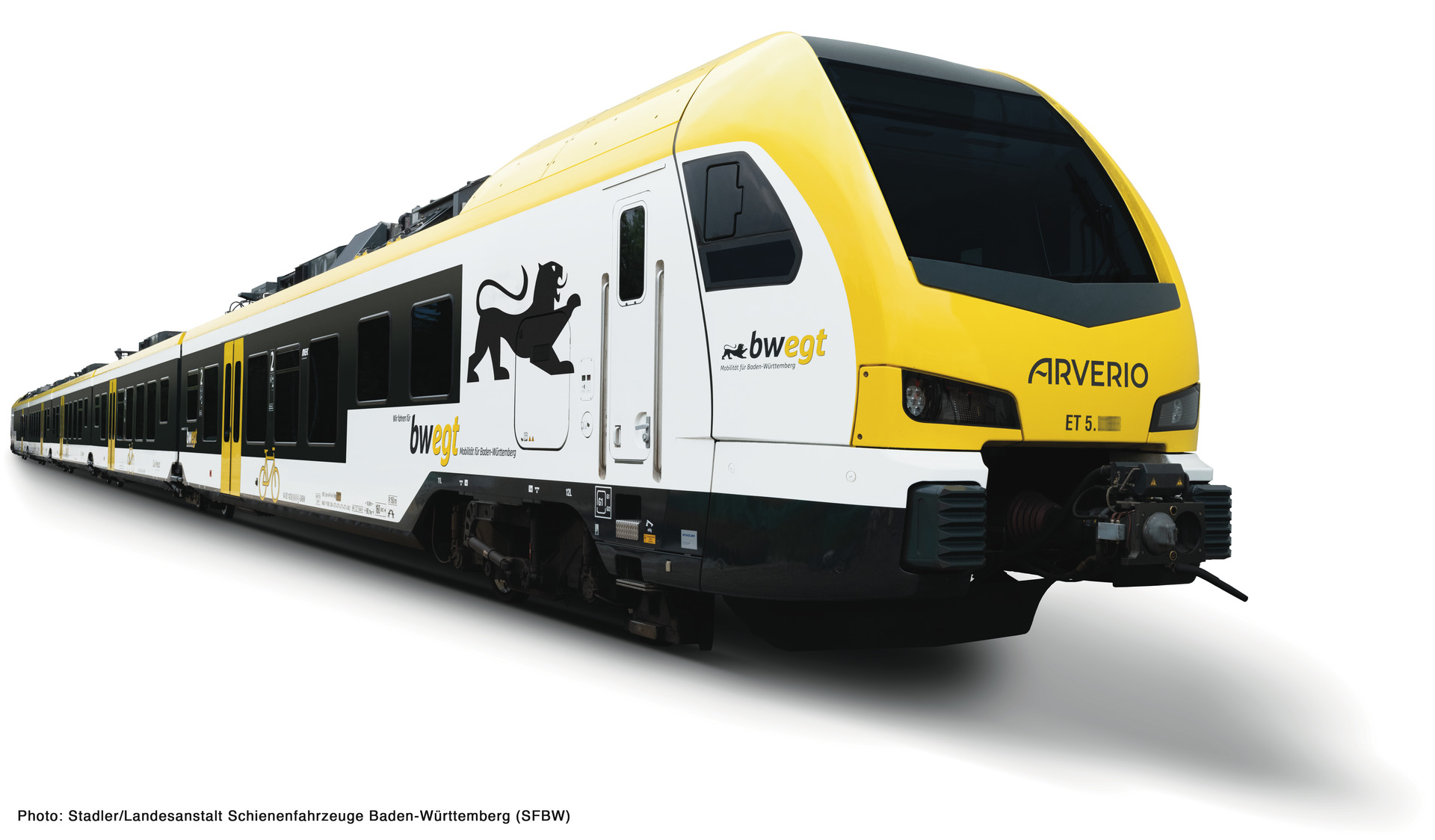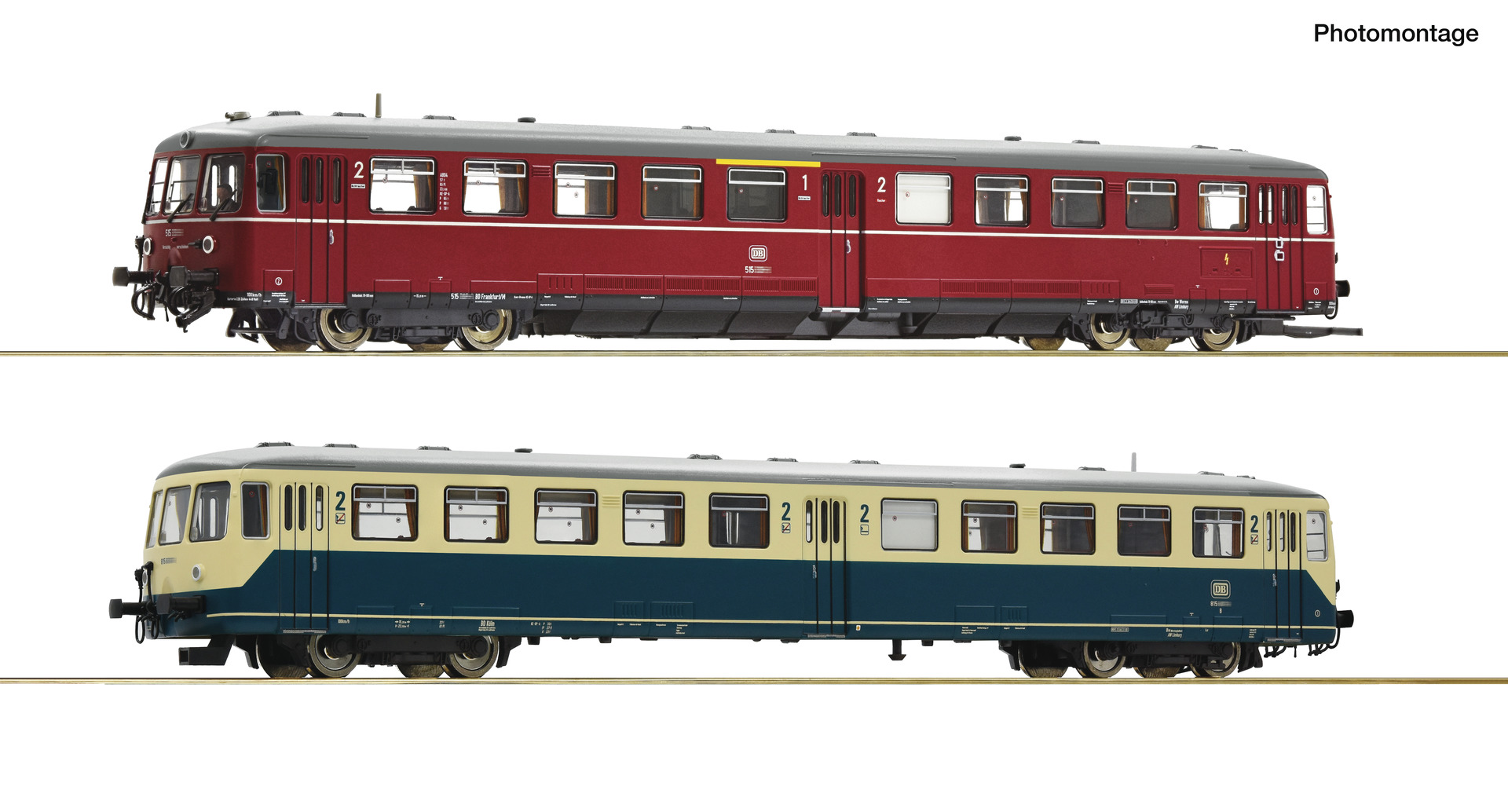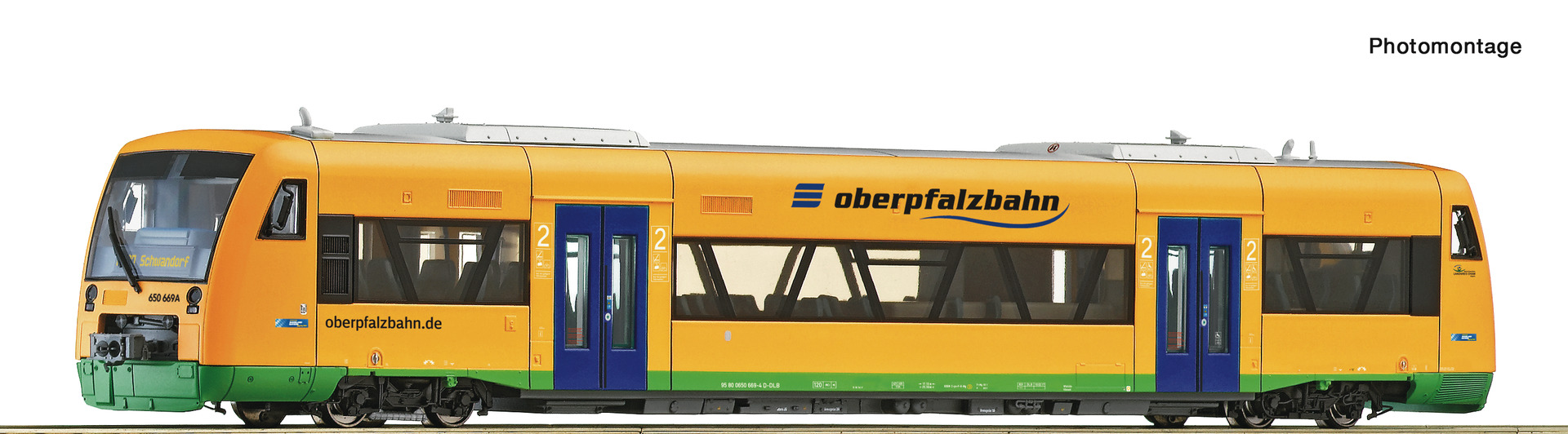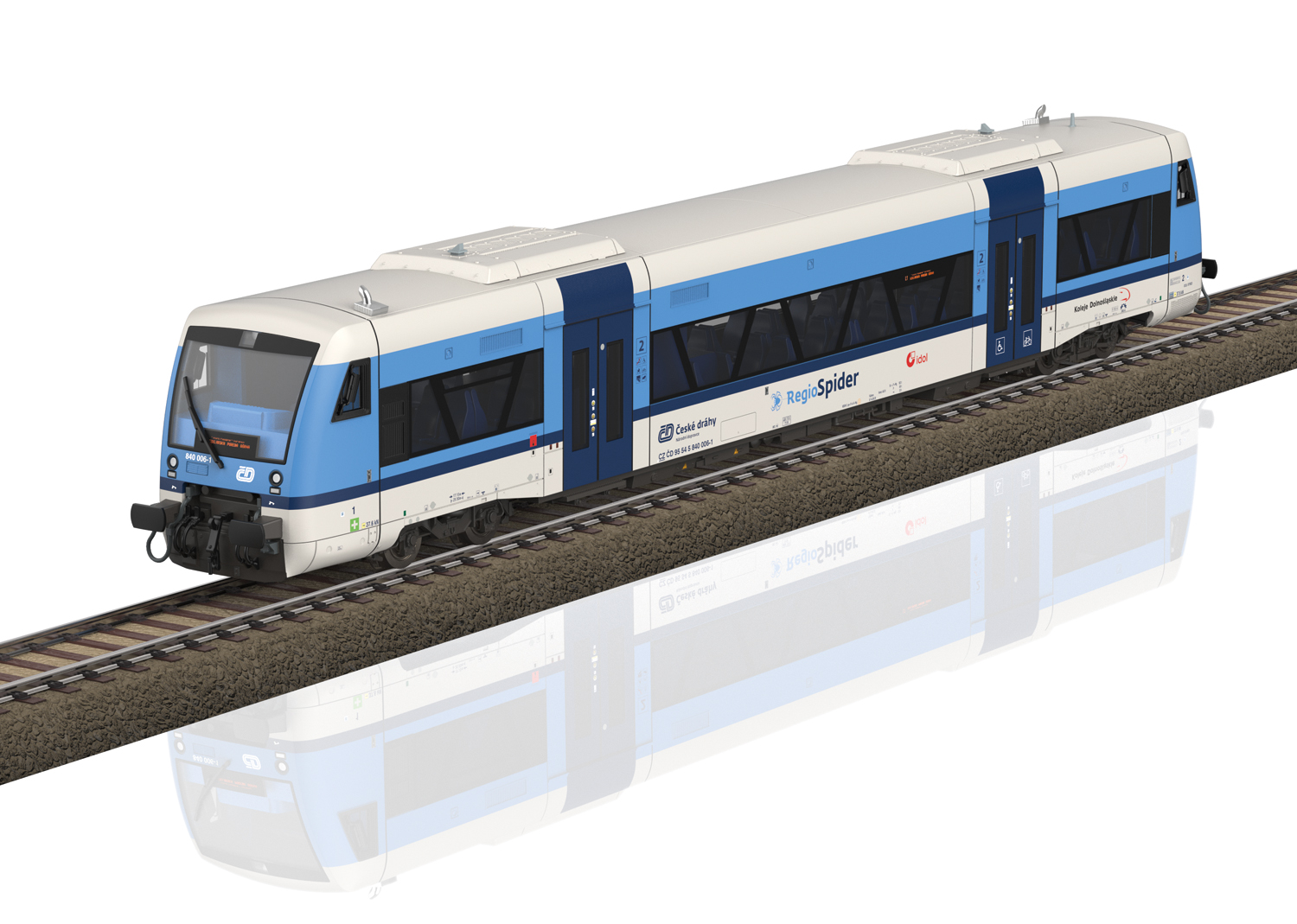
Modell: Mit Digital-Decoder mfx+ und umfangreichen Geräusch- und Lichtfunktionen. Geregelter Hochleistungsantrieb mit Schwungmasse im Endwagen A zentral eingebaut. Alle vier Achsen in beiden Drehgestellen über Kardan angetrieben. Haftreifen. Fahrtrichtungsabhängige Stromversorgung über den jeweils vorderen Endwagen. Spezial-Kurzkupplungen mit Kulissenführung. Fahrtrichtungsabhängig wechselndes Dreilicht-Spitzensignal und zwei rote Schlusslichter, konventionell in Betrieb, digital schaltbar. Doppel-A-Lichtfunktion. Fernlicht vorbildgerecht in zwei Intensitäten, Führerstands- und Führerpultbeleuchtung sowie Beleuchtung der Zugzielanzeigen an den Fronten und Seiten digital schaltbar. Serienmäßig eingebaute LED-Innenbeleuchtung. In jedem Wagen ist ein Pufferkondensator zur Überbrückung von kurzfristigen stromlosen Stellen eingebaut. Die Innenbeleuchtung wird versorgt über die durchgehende elektrische Verbindung des ganzen Zuges. Gesamte Beleuchtung mit wartungsfreien warmweißen und roten Leuchtdioden (LED). Mehrfarbige Inneneinrichtungen. Stromabnehmer digital heb- und senkbar. Viele separat angesetzte Details. Befahrbarer Mindestradius 360 mm. Länge des Zuges ca. 112,6 cm.
Diesen Elektrotriebzug finden Sie in Gleichstromausführung im Trix H0-Sortiment unter der Artikelnummer 25462. Ab 15 Jahre. WEEE-Nummer: DE30519521 DB Desiro HC Elec.Train, VI. Siemens Desiro HC Electric Powered Train Era VI Prototype: German Railroad, Inc. (DB AG) Siemens Desiro HC electric powered train as the class 1462/1862. One class 1462.0 end car, 2nd class, one class 1862.0 intermediate car, 2nd class, one class 1862.5 intermediate car, 2nd class, and one class 1462.5 end car, 1st/2nd class. The train is part of the Franconian-South Thuringian Network. Traffic red basic paint scheme. The train looks as it did starting in December of 2023.
Model: The train has an mfx+ digital decoder and extensive sound and light functions. It also has controlled, high-efficiency propulsion with a flywheel, built centrally into End Car A. All four axles powered in both trucks using cardan shafts. Traction tires. The current supply changes over with the direction of travel and is picked up at the end car at the front of the train. There are special close couplers with a guide mechanism. Triple headlights and dual red marker lights change over with the direction of travel, will work in conventional operation, and can be controlled digitally. There is a double A light function. Long-distance headlights prototypically have two levels of brightness. They, the cab and control desk lighting as well as lighting for the train destination signs at the ends and on the sides can be controlled digitally. There is factory-installed LED interior lighting. A buffer capacitor is built into each car to bridge over temporary spots without current. The interior lighting receives current using the continuous electrical connection for the entire train. Maintenance-free warm white and red LEDs are used for all of the train's lighting. The interior details are multi-colored. The pantographs can be raised and lowered digitally. There are many separately applied details. The minimum radius for operation is 360 mm / 14-3/16. Length of the train approximately 112.6 cm / 44-5/16.
This electric powered train can be found in a DC version in the Trix H0 assortment under item number 25462.. From 15 years of age. Epoche 6 . Train autom. Desiro HC DB, VI. Modèle réel : Train automoteur électrique type Siemens Desiro HC, série 1462/1862 de la Deutsche Bahn AG (DB AG). Une voiture d'extrémité série 1462.0, 2nde classe, une voiture centrale série 1862.0, 2nde classe, une voiture centrale série 1862.5, 2nde classe et une voiture d'extrémité série 1462.5, 1ère/2nde classe. Véhicule du réseau Franken-Südthüringen. Livrée de base rouge trafic. Etat de service : à partir de décembre 2023.
Modèle réduit : Avec décodeur numérique mfx+ et nombreuses fonctions sonores et lumineuses. Position centrale du moteur régulé haute performance avec volant d'inertie dans la voiture d'extrémité A. Les quatre essieux dans les deux bogies sont entraînés par cardan. Bandages d'adhérence. Alimentation électrique en fonction du sens de marche via la voiture d'extrémité respectivement en tête. Attelages courts spéciaux à élongation variable. Inversion du fanal à trois feux et des deux feux rouges de fin de convoi en fonction du sens de marche, fonction permanente en mode d'exploitation conventionnel, sélection possible en mode numérique. Fonction double feux A. Feux de grande portée réalistes avec deux intensités, éclairage du poste de conduite et du pupitre de conduite ainsi qu'affichages lumineux frontaux et latéraux commutables en mode numérique. Éclairage intérieur LED intégré de série. Un condensateur tampon est intégré dans chaque voiture pour pallier les brèves coupures de courant. L'éclairage intérieur est alimenté par la liaison électrique continue de l'ensemble du train. Tout l'éclairage est assuré par des diodes électroluminescentes (LED) blanc chaud et rouges sans entretien. Aménagements intérieurs multicolores. Pantographes relevables et abaissables en mode numérique. Nombreux détails rapportés. Rayon minimal d'inscription en courbe : 360 mm. Longueur du train approximative : 112,6 cm environ.
Vous trouverez ce train automoteur électrique en version pour courant continu dans la gamme Trix H0 sous la réf. 25462.. Dès l'âge de 15 ans.
Vorbild: Dreiteiliger Elektro-Triebzug als Intercity Triebzug Baureihe ICM-1 Koploper der Niederländischen Eisenbahnen (NS). Ausführung in der Gestaltung Martinair Holland. 1 Motorwagen als Endwagen mBk 2. Klasse, 1 Mittelwagen AB 1./2. Klasse, 1 Steuerwagen als Endwagen sBk 2. Klasse. Triebzug-Betriebsnummer 4012. Betriebszustand Juni 1986.
Modell: Mit Digital-Decoder mfx+ und umfangreichen Geräuschfunktionen. 3-teilige Ausführung. Fahrgestell beim motorisierten Endwagen aus Druckguss. Geregelter Hochleistungsantrieb mit Schwungmasse. 2 Achsen in einem Drehgestell angetrieben. Haftreifen. Führerstände in den beiden Endwagen mit Inneneinrichtung. Fahrtrichtungsabhängige Stromversorgung über den jeweils vorderen Triebkopf. Spezial-Kurzkupplungen mit Kulissenführung. Serienmäßig eingebaute Innenbeleuchtung. Fahrtrichtungsabhängig wechselndes Dreilicht-Spitzensignal und 2 rote Schlusslichter sowie Innenbeleuchtung konventionell in Betrieb, digital schaltbar. Spitzensignal an Endwagenseite 2 und 1 jeweils digital separat abschaltbar. Spitzensignal mit vorbildgerechten leicht gelben und roten Leuchtdioden (LED). Innenbeleuchtungen mit warmweißen LED. Detaillierte Ausführung von Fahrwerk und Aufbau. An den Endwagen Darstellung der Scharfenberg-Kupplung. Für Doppeltraktion liegt eine zusätzliche starre Kupplungsverbindung bei. Im Serienzustand Ausführung der Endwagen mit geschlossenen Übergangstüren. Darstellung der an einem Endwagen zur Seite geschobenen Schwenktüren mit Faltenbalg ist mit beigelegtem Einsteckteil möglich. Gesamtlänge des Zuges 86,6 cm.
Dieses Modell finden Sie in Gleichstrom-Ausführung im Trix H0-Sortiment unter der Artikelnummer 25426. Ab 15 Jahre. WEEE-Nummer: DE30519521 NS "Koploper" Train, 3-Part. Class ICM-1 Koploper Electric Rail Car Train The Netherlands shines with many special features. This also holds true for railroading in the neighboring country of Germany. The railroad placed special value quite early on its own locomotive and car creations, which often attracted attention outside of Holland with unusual designs. When the Dutch State Railways (NS) wanted to modernize its intercity service in the Seventies, it developed a rather unusual powered rail car train in cooperation with the German car builder Talbot. This train featured panorama cabs above the car connection corridors. This gave the ICM, as the NS designated its new train sets, a really massive appearance. Since passengers could go into the next unit at the end units, these modern but quaint units were called Koploper. The 144 Koploper trains built soon left an impact on modern intercity service in the Netherlands. When the Amste
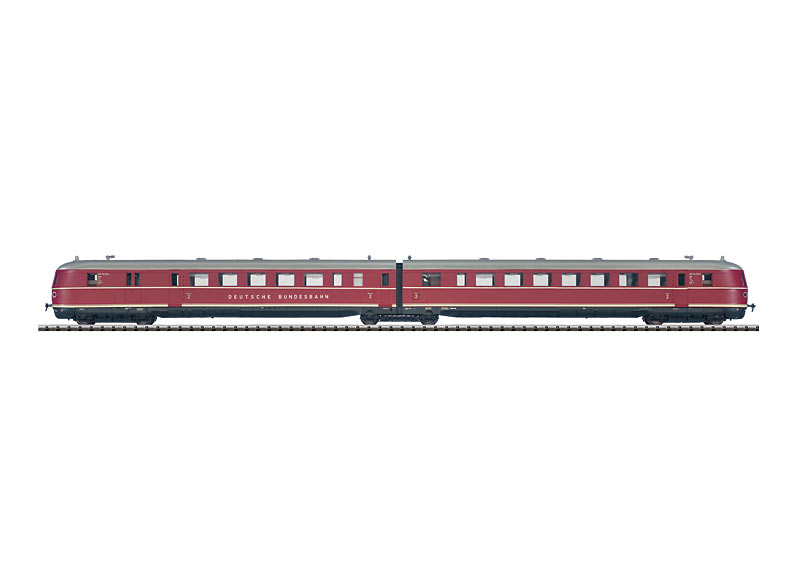
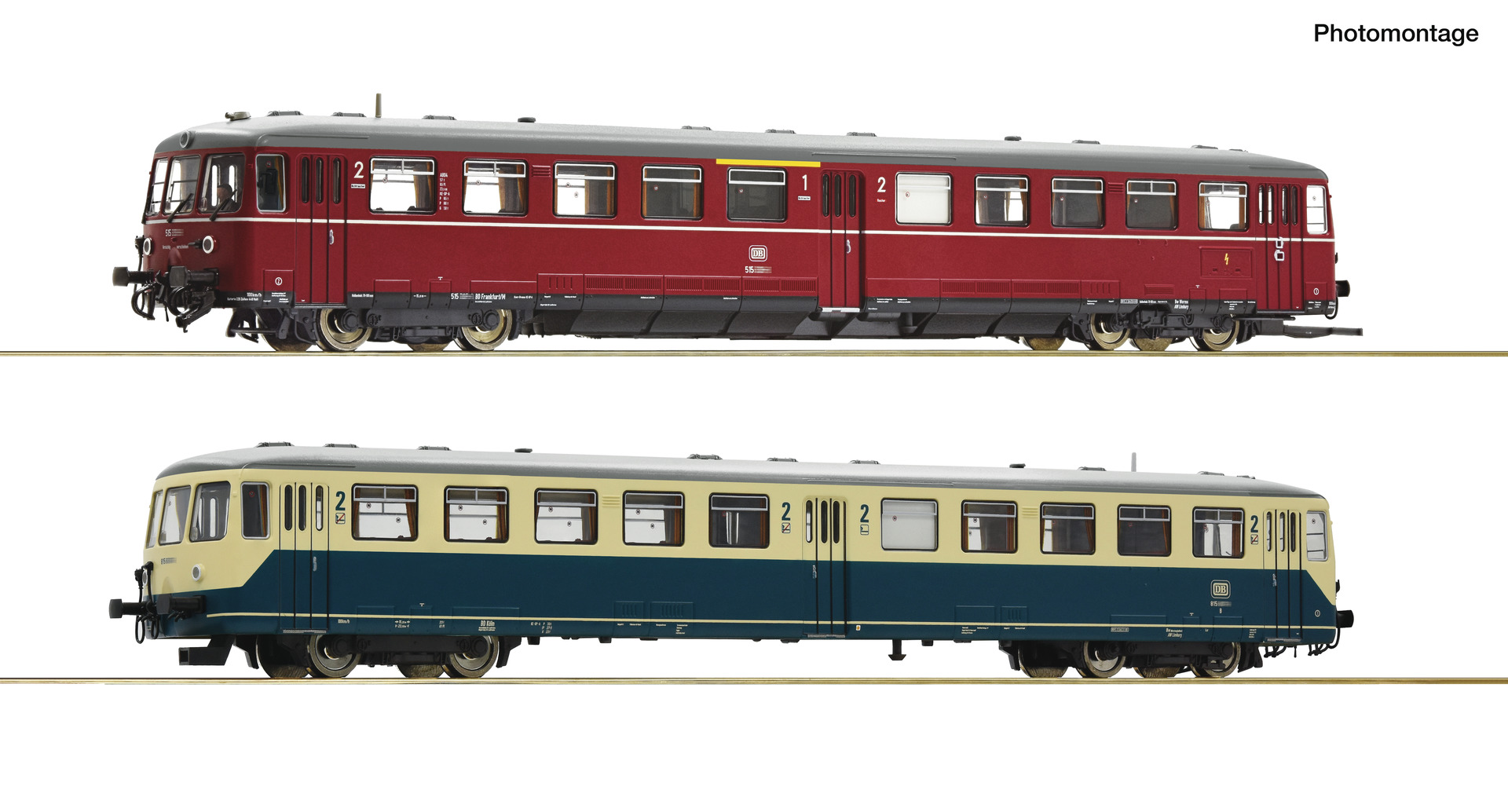
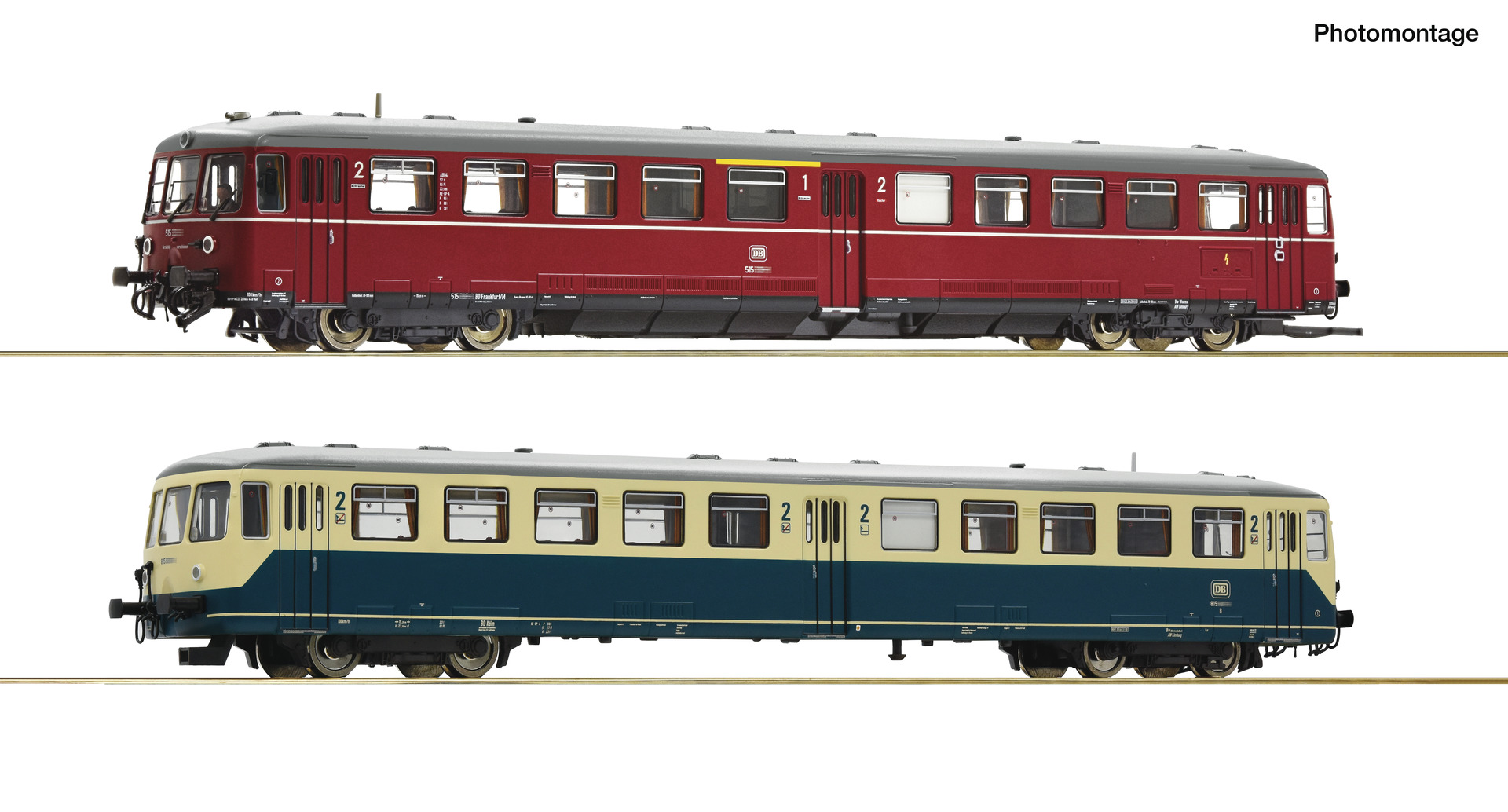
Vorbild: Schienenbus-Motorwagen Baureihe VT 98.9 und Schienenbus-Steuerwagen Baureihe VS 98 der Deutschen Bundesbahn (DB). In purpurroter Ursprungsfarbgebung. Motorwagen-Betriebsnummer VT 98 9705, Steuerwagen-Betriebsnummer VS 98 306. Betriebszustand Anfang der 1960er-Jahre.
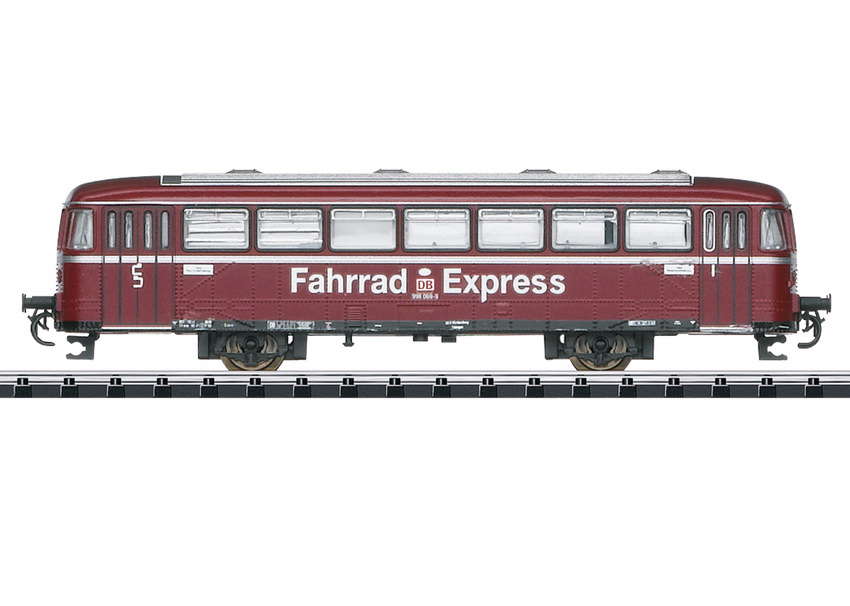
Modell: Motorwagen mit Digital-Decoder mfx+ und umfangreichen Geräusch- und Lichtfunktionen. Geregelter Hochleistungsantrieb. 2 Achsen angetrieben. Haftreifen. Serienmäßig eingebaute Innenbeleuchtung. Fahrtrichtungsabhängig wechselndes Dreilicht-Spitzensignal und 2 rote Schlusslichter, zusammen mit der Innenbeleuchtung konventionell in Betrieb, digital schaltbar. Spitzenlicht am Motorwagen je Seite jeweils separat digital abschaltbar. Steuerwagen mit serienmäßig eingebauter Innenbeleuchtung. Auf der Steuerseite fahrtrichtungsabhängig wechselndes Dreilicht-Spitzensignal mit 2 roten Schlusslichtern. Zwischen den Fahrzeug-Einheiten stromführende Kupplungsdeichsel-Verbindung mit Kulissenführung. Stromführende Kupplungsdeichsel und Bremsschläuche liegen bei. Beleuchtung mit wartungsfreien warmweißen und roten Leuchtdioden (LED). Beide Fahrzeug-Einheiten sowie der optional erhältliche Beiwagen mit freiem Durchblick bei den Führerständen und im Fahrgastraum.Länge über Puffer der zweiteiligen Garnitur 32,2 cm.
Zur Ergänzung der zweiteiligen Fahrzeug-Garnitur aus Motor- und Steuerwagen ist der passende Schienenbus-Beiwagen VB 98 unter der Artikelnummer 41988 erhältlich. Ab 15 Jahre. WEEE-Nummer: DE30519521 VT98 + VS 98 rail car DB. Class VT 98.9 Powered Rail Car Always a Seat
Prototype: German Federal Railroad (DB) class VT 98.9 rail bus motor car and class VS 98 rail bus control car. In original crimson paint scheme. Motor car road number VT 98 9705, control car road number VS 98 306. The cars look as they did at the start of the Sixties.
Model: The motor car has an mfx+ digital decoder and extensive sound and light functions. It also has controlled high-efficiency propulsion. 2 axles powered. Traction tires. The rail bus has factory-installed interior lighting. The rail bus has triple headlights and dual red marker lights that change over with the direction of travel, will work along with the interior lighting in conventional operation, and can be controlled digitally. The headlights at both ends of the motor car can be turned off separately. The control car has factory-installed interior lighting. The control end of the car has triple headlights and dual red marker lights that change over with the direction of travel. The rail bus units have a current-conducting drawbar coupling with a guide mechanism between them. Brake hoses and a current-conducting drawbar coupling are included. Maintenance-free warm white and red LEDs are used for the lighting. The engineer's stands and the car's interior on both cars as well as on the optionally available trailer car allow an open view through the windows. Length over the buffers of the two-part set 32.2 cm / 12-11/16.
The VB 98 rail bus trailer car to add to this two-part set consisting of a motor and a control car is available under item number 41988.. From 15 years of age. . Wagon motorisé de classe VT 9. Toujours une place assise
Modèle réel : Voiture motrice pour autorail série VT 98.9 et voiture-pilote pour autorail série VS 98 de la Deutsche Bundesbahn (DB). En livrée d?origine pourpre. Numéro d?immatriculation de la voiture motrice VT 98 9705, numéro d?immatriculation de la voiture-pilote VS 98 306. État de service : début des années 1960.
Modèle réduit : Voiture motrice avec décodeur numérique mfx+ ainsi que nombreuses fonctions sonores et lumineuses. Motorisation régulée haute performance. 2 essieux moteurs. Bandages d?adhérence. Éclairage intérieur intégré de série. Fonction permanente du fanal à trois feux et des 2 feux rouges de fin de convoi ? inversion en fonction du sens de marche ? ainsi que de l?éclairage intérieur en mode d?exploitation conventionnel,
Modell: Mit Digital-Decoder mfx+ und umfangreichen Geräusch- und Lichtfunktionen. Geregelter Hochleistungsantrieb mit Schwungmasse im Endwagen A zentral eingebaut. Alle vier Achsen in beiden Drehgestellen über Kardan angetrieben. Haftreifen. Fahrtrichtungsabhängige Stromversorgung über den jeweils vorderen Endwagen. Spezial-Kurzkupplungen mit Kulissenführung. Fahrtrichtungsabhängig wechselndes Dreilicht-Spitzensignal und zwei rote Schlusslichter, konventionell in Betrieb, digital schaltbar. Doppel-A-Lichtfunktion. Fernlicht vorbildgerecht in zwei Intensitäten, Führerstands- und Führerpultbeleuchtung sowie Beleuchtung der Zugzielanzeigen an den Fronten und Seiten digital schaltbar. Serienmäßig eingebaute LED-Innenbeleuchtung. In jedem Wagen ist ein Pufferkondensator zur Überbrückung von kurzfristigen stromlosen Stellen eingebaut. Die Innenbeleuchtung wird versorgt über die durchgehende elektrische Verbindung des ganzen Zuges. Gesamte Beleuchtung mit wartungsfreien warmweißen und roten Leuchtdioden (LED). Mehrfarbige Inneneinrichtungen. Stromabnehmer digital heb- und senkbar. Viele separat angesetzte Details. Befahrbarer Mindestradius 360 mm. Länge des Zuges ca. 112,6 cm.
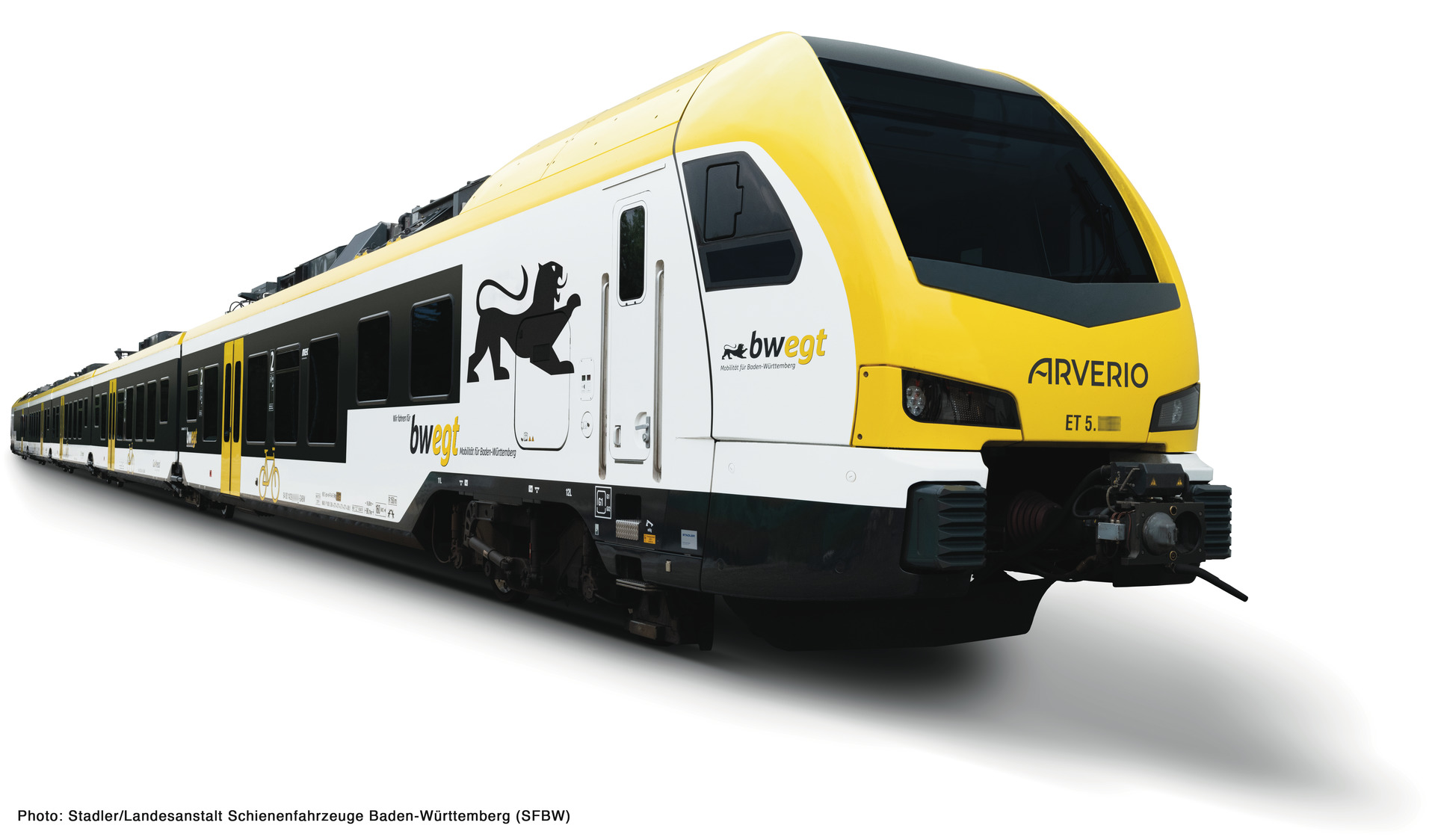
Diesen Elektrotriebzug finden Sie in Gleichstromausführung im Trix H0-Sortiment unter der Artikelnummer 25463. Ab 15 Jahre. WEEE-Nummer: DE30519521 Desiro HC Elec. Train bwegt. Siemens Desiro HC Electric Powered Train Prototype: German Railroad, Inc. (DB AG) Siemens Desiro HC electric powered train as the class 1462/1862. One class 1462.0 end car, 2nd class, one class 1862.0 intermediate car, 2nd class, one class 1862.5 intermediate car, 2nd class, and one class 1462.5 end car, 1st/2nd class. The train is part of the Rhine Valley Network. Painted and lettered in the provincial design for Baden-Württemberg (bw in motion). The train looks as it did starting in 2020.
Model: The train has an mfx+ digital decoder and extensive sound and light functions. It also has controlled, high-efficiency propulsion with a flywheel, built centrally into End Car A. All four axles powered in both trucks using cardan shafts. Traction tires. The current supply changes over with the direction of travel and is picked up at the end car at the front of the train. There are special close couplers with a guide mechanism. Triple headlights and dual red marker lights change over with the direction of travel, will work in conventional operation, and can be controlled digitally. There is a double A light function. Long-distance headlights prototypically have two levels of brightness. They, the cab and control desk lighting as well as lighting for the train destination signs at the ends and on the sides can be controlled digitally. There is factory-installed LED interior lighting. A buffer capacitor is built into each car to bridge over temporary spots without current. The interior lighting receives current using the continuous electrical connection for the entire train. Maintenance-free warm white and red LEDs are used for all of the train's lighting. The interior details are multi-colored. The pantographs can be raised and lowered digitally. There are many separately applied details. The minimum radius for operation is 360 mm / 14-3/16. Length of the train approximately 112.6 cm / 44-5/16.
This electric powered train can be found in a DC version in the Trix H0 assortment under item number 25463.. From 15 years of age. . Train autom. Desiro HC,bwegt. Modèle réel : Train automoteur électrique type Siemens Desiro HC, série 1462/1862 de la Deutsche Bahn AG (DB AG). Une voiture d'extrémité série 1462.0, 2nde classe, une voiture centrale série 1862.0, 2nde classe, une voiture centrale série 1862.5, 2nde classe et une voiture d'extrémité série 1462.5, 1ère/2nde classe. Véhicule du réseau Rheintal. Livrée basée sur le design du Land Baden-Württemberg (bwegt). Etat de service : à partir de 2020.
Modèle réduit : Avec décodeur numérique mfx+ et nombreuses fonctions sonores et lumineuses. Position centrale du moteur régulé haute performance avec volant d'inertie dans la voiture d'extrémité A. Les quatre essieux dans les deux bogies sont entraînés par cardan. Bandages d'adhérence. Alimentation électrique en fonction du sens de marche via la voiture d'extrémité respectivement en tête. Attelages courts spéciaux à élongation variable. Inversion du fanal à trois feux et des deux feux rouges de fin de convoi en fonction du sens de marche, fonction permanente en mode d'exploitation conventionnel, sélection possible en mode numérique. Fonction double feux A. Feux de grande portée réalistes avec deux intensités, éclairage du poste de conduite et du pupitre de conduite ainsi qu'affichages lumineux frontaux et latéraux commutables en mode numérique. Éclairage intérieur LED intégré de série. Un condensateur tampon est intégré dans chaque voiture pour pallier les brèves coupures de courant. L'éclairage intérieur est alimenté par la liaison électrique continue de l'ensemble du train. Tout l'éclairage est assuré par des diodes électroluminescentes (LED) blanc chaud et rouges sans entretien. Aménagements intérieurs multicolores. Pantographes relevables et abaissables en mode numérique. Nombreux détails rapportés. Rayon minimal d'inscription en courbe : 360 mm. Longueur du train approximative : 112,6 cm environ.
Vous trouverez ce train automoteur en version pour courant continu dans la gamme Trix H0, sous la réf. 25463.. Dès l'âge de 15 ans.
Modell: Mit Digital-Decoder mfx+ und umfangreichen Geräuschfunktionen. Geregelter Hochleistungsantrieb. Wartungsfreier Motor in kompakter Bauform. 2 Achsen angetrieben. Angesetzte Griffstangen am Führerhaus. Fahrtrichtungsabhängig wechselndes Dreilicht-Spitzensignal und zwei rote Schlusslichter konventionell in Betrieb, digital schaltbar. Spitzensignal an Lokseite 2 und 1 jeweils digital separat abschaltbar. Doppel-A-Licht-Funktion. Beleuchtung mit wartungsfreien warmweißen und roten Leuchtdioden (LED). Führerstand mit Einrichtung und schaltbarer Innenbeleuchtung. Ladekran motorisch schwenkbar, digital steuerbar.Länge über Puffer 13,4 cm.
Die ideale Ergänzung für den Zweiwege-Unimog der Firma Leonhard Weiss, welcher unter der Artikelnummer 39942 exklusiv im Shop des märklineums in Göppingen erhältlich ist. Dieses Produkt entstand in Kooperation mit der Firma Viessmann Modelltechnik GmbH. Ab 15 Jahre. WEEE-Nummer: DE30519521 Leonh. Weiss ROBEL, Era VI. ROBEL Powered Track Car Era VI Prototype: ROBEL powered track car based on the class 54.20 for the firm Leonhard Weiss, Göppingen, Germany. With a movable loading crane. Used for maintenance and monitoring. Gold yellow basic paint scheme. The unit looks as it did starting in 2020.
Model: The model has an mfx+ digital decoder and extensive sound functions. It has controlled high-efficiency propulsion. The model has a compact design maintenance-free motor. 2 axles powered. The model has separately applied grab irons on the cab. The triple headlights and dual red marker lights change over with the direction of travel and can be controlled digitally. The headlights at Locomotive Ends 2 and 1 can be turned off separately in digital operation. The model has the double A light function. Maintenance-free warm white and red LEDs are used for the lighting. The cab has interior details and controllable interior lighting. The loading crane can be turned by a motor and can be controlled digitally.Length over the buffers 13.4 cm / 5-1/4.
The ideal add-on for the two-way Unimog of the firm Leonhard Weiss, which is available under item number 39942 exclusively in the shop for the märklineum in Göppingen, Germany. This product was done in cooperation with the firm Viessmann Modelltechnik GmbH.. From 15 years of age. Epoche 6 . ROBEL, Leonh. Weiss, ép. VI. Modèle réel : Draisine ROBEL inspiré du type 54.20 de la firme Leonhard Weiss, Göppingen. Avec grue de chargement mobile. Utilisée pour la maintenance et le contrôle. Livrée de base jaune doré. Etat de service à partir de 2020.
Modèle réduit : Avec décodeur numérique mfx+ et nombreuses fonctions sonores. Motorisation régulée haute performance. Moteur sans entretien de forme compacte. 2 essieux moteurs. Mains montoires rapportées sur la cabine de conduite. Fonction permanente du fanal à trois feux et des deux feux rouges de fin de convoi - inversion en fonction du sens de marche - en mode d'exploitation conventionnel, sélection possible en mode numérique. Sélection distincte du fanal des côtés 2 et 1 de la locomotive possible en mode numérique. Fonction double feu A. Éclairage assuré par diodes électroluminescentes (LED) blanc chaud et rouges sans entretien. Poste de conduite avec aménagement et éclairage intérieur commutable. Grue de chargement pivotante motorisée, commande numérique.Longueur h.t. 13,4 cm.
Le complément idéal pour l'Unimog rail-route de la firme Leonhard Weiss, disponible sous la réf. 39942 exclusivement dans le magasin du Märklineum à Göppingen.Ce produit est le fruit d'une collaboration avec la firme Viessmann Modelltechnik GmbH. Dès l'âge de 15 ans.
Modell: Mit Digital-Decoder mfx+ und umfangreichen Geräuschfunktionen. Geregelter Hochleistungsantrieb mit Schwungmasse. 2 Achsen angetrieben. Haftreifen. Fahrtrichtungsabhängig wechselndes Dreilicht-Spitzensignal und zwei rote Schlusslichter konventionell in Betrieb, digital schaltbar. Spitzenlicht am Führerstand 2 und 1 jeweils separat digital abschaltbar. Spitzenlicht oben separat digital schaltbar. Serienmäßig eingebaute Innenbeleuchtung digital schaltbar. Steuerpultbeleuchtung digital schaltbar. Beleuchtung mit wartungsfreien warmweißen und roten Leuchtdioden (LED). Mit Pufferspeicher. Angesetzte Griffstangen aus Metall. Länge über Stoßbügel ca. 13,5 cm.
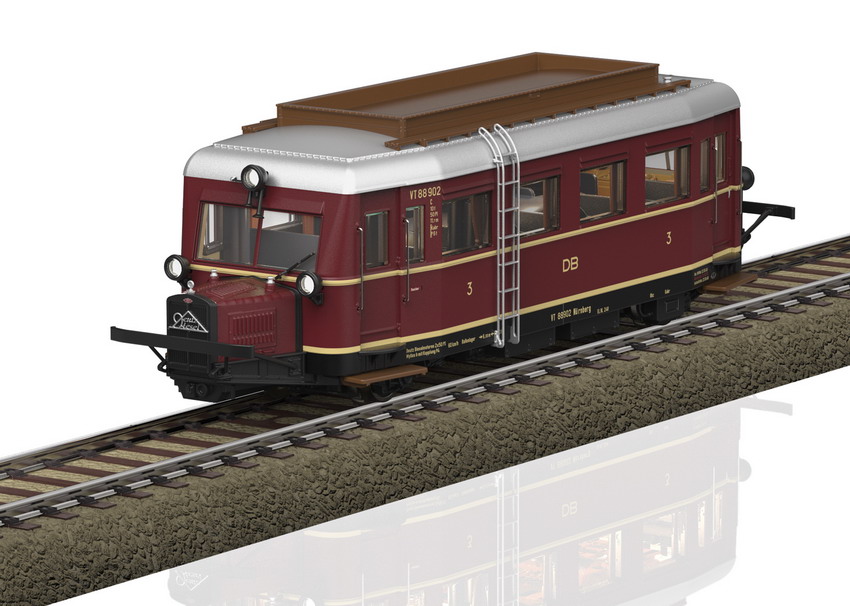
Dieses Modell finden Sie in Gleichstromausführung im Trix H0-Sortiment unter der Artikelnummer 25135. Ab 15 Jahre. WEEE-Nummer: DE30519521 DB Cl. VT 88.9 Rl. Bus E. III. Class VT 88.9 Diesel Powered Rail Car ? the Pig's Snout Era III Prototype: Cvt-34 Wismar Rail Bus type Cvt-34 diesel powered rail car (type Hannover A) as the DB class VT 88.9. Crimson paint scheme. The rail car looks as it did around 1950. Road number VT 88 902, Nürnberg.
Model: The rail car has an mfx+ digital decoder and extensive sound functions. It also has controlled high-efficiency propulsion with a flywheel. 2 axles powered. Traction tires. Triple headlights and dual red marker lights change over with the direction of travel, will work in conventional operation, and can be controlled digitally. The headlights at Cabs 2 and 1 can be turned off separately in digital operation. The headlights above can be controlled separately in digital operation. The factory-installed interior lighting can be controlled digitally. Lighting for the control desks can be controlled digitally. Maintenance-free warm white and red LEDs are used for the lighting. A buffer capacitor is included. There are separately applied metal grab irons. Length over the bumpers approximately 13.5 cm / 2-1/2.
This model can be found in a DC version in the Trix H0 assortment under item number 25135.. From 15 years of age. Epoche 3 . Autorail VT 88.9, DB, III. Modèle réel : Automotrice diesel Cvt-34 » Autorail de Wismar « (type » Hanovre A «) en tant que VT 88.9 de la DB. livrée pourpre. État vers 1950. VT 88 902, Nuremberg.
Modèle réduit : Avec décodeur numérique mfx+ et nombreuses fonctions sonores. Motorisation régulée haute performance avec volant d'inertie. 2 essieux moteurs. Bandages d'adhérence. Fonction permanente du fanal à trois feux et des deux feux rouges de fin de convoi (inversion en fonction du sens de marche) en mode d'exploitation conventionnel, sélection possible en mode numérique. Sélection distincte du fanal sur les postes de conduite 2 et 1 possible en mode numérique. Sélection distincte de l'éclairage frontal supérieur possible en mode numérique. Éclairage intérieur intégré de série, commutable en mode numérique. Éclairage du pupitre de commande commutable en mode numérique. Éclairage assuré par diodes électroluminescentes (LED) blanc chaud et rouges sans entretien. Avec réservoir tampon. Barres de maintien rapportées en métal. Longueur approximative hors barre antichoc : 13,5 cm.
Vous trouverez ce modèle en version pour système 2 rails c.c. dans la gamme Trix H0, sous la réf. 25135.. Dès l'âge de 15 ans.
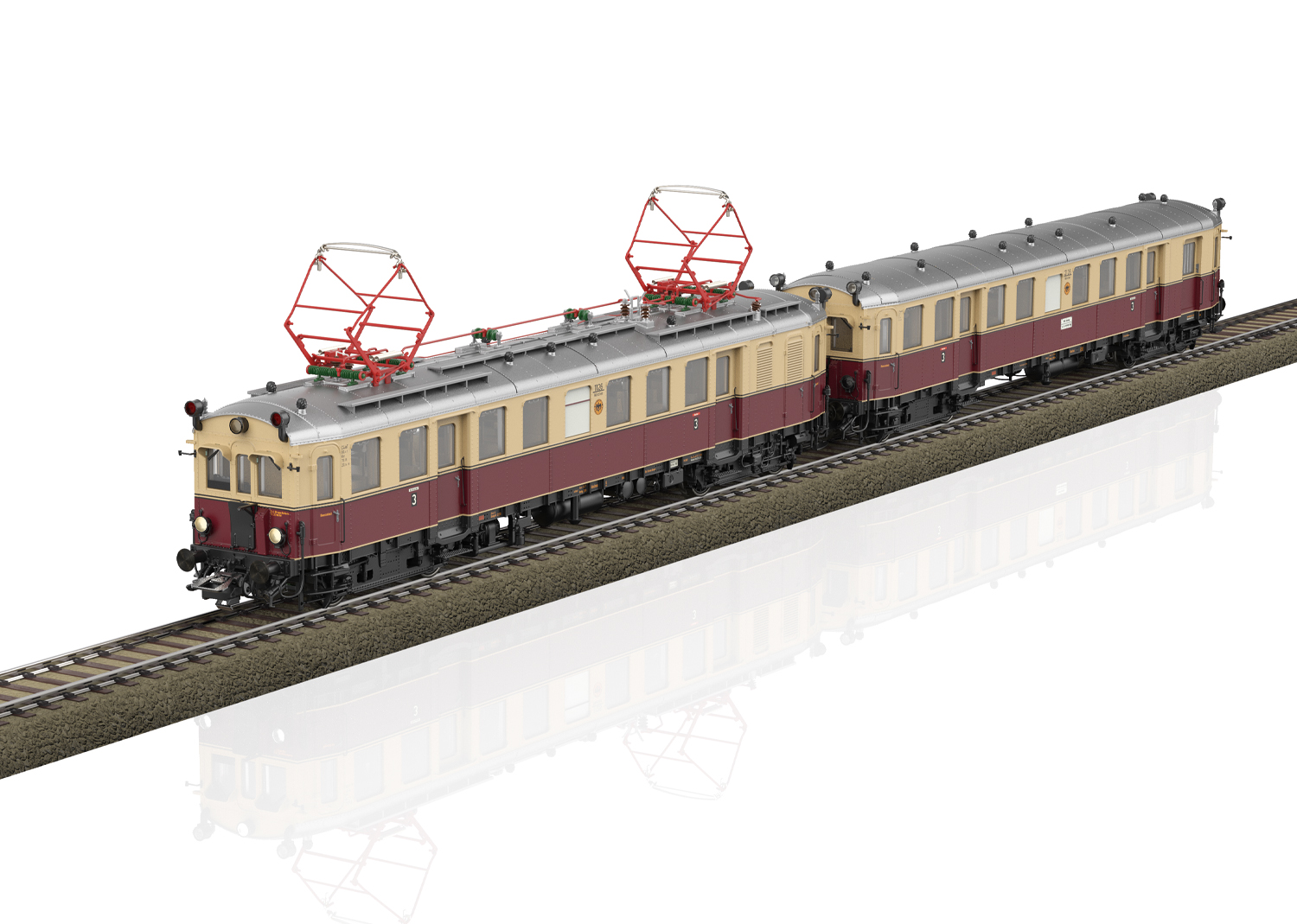
Vorbild: Elektrischer Triebwagen ET 85 mit Steuerwagen ES 85 der Deutschen Bundesbahn (DB). Ausführung mit oben angebrachten Zugschlußsignal-Laternen in purpurroter Farbgebung. Betriebsnummern ET 85 21 und ES 85 20. Heimatbetriebswerk München. Betriebszustand ab 1958.
Modell: ET 85 als Angetriebene Einheit mit Digital-Decoder mfx+ und umfangreichen Geräuschfunktionen. Geregelter Hochleistungsantrieb. Vier Achsen angetrieben. Haftreifen. Dreilicht-Spitzensignal und zwei rote Schlusslichter über beide Einheiten an den äußeren Stirnseiten mit der Fahrtrichtung wechselnd, digital schaltbar. Beide Einheiten sind über eine mehrpolige Kupplung fest miteinander Gekuppelt. Innenbeleuchtungen im Triebwagen ET 85 und Steuerwagen ES 85 konventionell in Betrieb, digital schaltbar. Beleuchtung mit wartungsfreien warmweißen Leuchtdioden (LED). Spitzensignal an Triebwagenseite 1 und Steuerwagenseite 2 jeweils separat digital abschaltbar. Führerstandbeleuchtung an den äußeren Führerständen separat digital schaltbar.Sehr detaillierte Ausführung von Fahrwerk und Aufbau. Wagenkasten und Wagenboden aus Metall.Mehrteilige und mehrfarbige Inneneinrichtung. Nachgebildete Bremsleitungen und zwei Kurzkupplungsköpfe liegen bei. Gesamtlänge über Puffer ca. 46,8 cm.
Dieses Modell finden Sie in Gleichstromausführung im Trix H0-Sortiment unter der Artikelnummer 25853. Ab 15 Jahre. WEEE-Nummer: DE30519521 DB Cl. ET85 Pow. Car, Era III. Class ET 85 Powered Rail Car Era III Pioneer in Electric Commuter Service
Prototype: German Federal Railroad (DB) class ET 85 electric powered rail car with a class ES 85 control car. Version with marker light lanterns mounted above, in a crimson paint scheme. Road numbers ET 85 21 and ES 85 20. Based in Munich. The units look as they did starting in 1958.
Model: The class ET 85 car is a powered unit and includes an mfx+ digital decoder and extensive sound functions. It has controlled high-efficiency propulsion. Four axles powered. Traction tires. Triple headlights and dual red marker lights on the outer ends of both cars change over with the direction of travel and can be controlled digitally. Both units are permanently coupled together using a single-conductor coupling. The interior lighting in the class ET 85 powered car and the class ES 85 control car will work in conventional operation and can be controlled digitally. Maintenance-free warm white LED's are used for the lighting. The headlights and marker lights on Power Car End 1 and Control Car End 2 can be turned off separately in digital operation. The cab lighting on the outer cabs can be controlled separately in digital operation. The construction of the frames and bodies is very detailed. The car bodies and car floors are constructed of metal. The interior details are done in multiple parts and multiple colors. Brake lines and two close coupler heads are included with this model. Total length over the buffers approximately 46.8 cm / 18-7/16.
This model can be found in a DC version in the Trix H0 assortment under item number 25853.. From 15 years of age. Epoche 3 . Autom. ET85, DB, ép. III. Pionnière dans le trafic local électrique
Modèle réel: Automotrice électrique ET 85 avec voiture-pilote ES 85 de la Deutsche Bundesbahn (DB). Version avec lanternes de signalisation de fin de convoi montées en haut, livrée pourpre. Numéro d'immatriculation: ET 85 21 et ES 85 20. Dépôt d'origine: Munich. Etat de service: à partir de 1958.
Modèle réduit : ET 85 en tant qu'unité motrice avec décodeur numérique mfx+ et nombreuses fonctions sonores. Motorisation régulée haute performance. Quatre essieux moteurs. Bandages d'adhérence. Inversion du fanal à trois feux et des deux feux rouges de fin de convoi en fonction du sens de marche sur les extrémités extérieures des deux unités, sélection possible en mode numérique. Attelage fixe multipolaire entre les deux unités. Fonction permanente des éclairages intérieurs de l'automotrice ET 85 et de la voiture-pilote ES 85 en mode d'exploitation conventionnel, sélection possible en mode numérique. Éclairage assuré par diodes électroluminescentes (LED) blanc chaud sans entretien. Sélection distincte du fanal du côté 1 de l'automotrice et du côté 2 de la voiture-pilote possible en mode numérique. Sélection distincte de l'éclairage dans les postes de conduite extérieurs possible en mode numérique.Version très détaillée du châssis et de la superstructure. Caisse et plancher de la voiture en métal.Aménagement intérieur multicolore avec plusieurs éléments. Des reproductions de conduites de frein et deux têtes d'attelage court sont fournies. Longueur totale h.t. approximative: 46,8 cm.
Vous trouverez ce modèle en version pour courant continu dans la gamme Trix H0, sous la réf. 25853.. Dès l'âge de 15 ans.
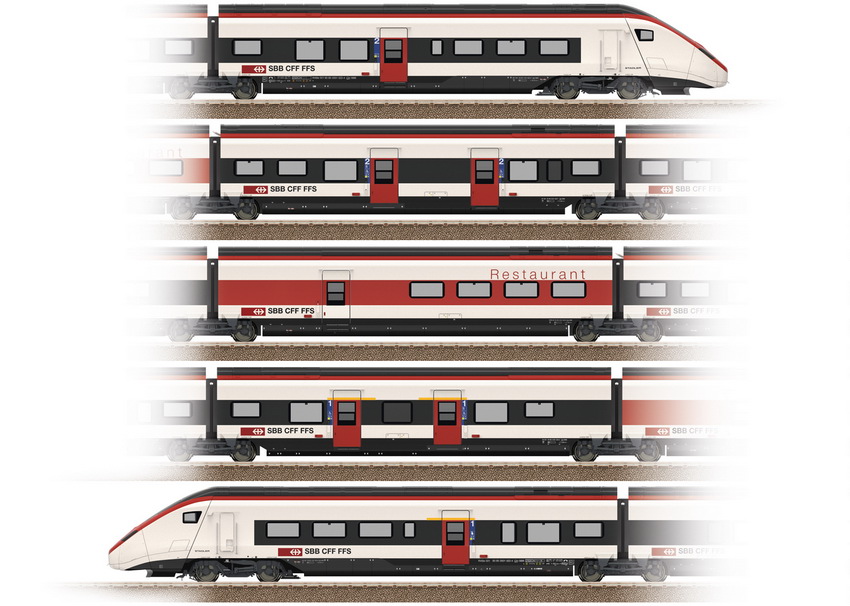
Modell: 7-teilige Grundgarnitur. Restaurantwagen G und die beiden links und rechts angeordneten Mittelwagen F und H sind über die Jakobs-Drehgestelle fest miteinander gekuppelt. Mit Digital-Decoder mfx+ und umfangreichen Geräusch- und Lichtfunktionen. Geregelter Hochleistungsantrieb mit Schwungmasse im Restaurantwagen zentral eingebaut. Alle 4 Achsen in beiden Jakobs-Drehgestellen links und rechts des Restaurantwagens über Kardan angetrieben. Haftreifen. Führerstände der Endwagen mit Inneneinrichtung. Fahrtrichtungsabhängige Stromversorgung über den jeweils vorderen Endwagen. Kulissenführung in den Jakobs-Drehgestellen. Fahrtrichtungsabhängig wechselndes Dreilicht-Spitzensignal und zwei rote Schlusslichter, konventionell in Betrieb, digital schaltbar. Umschaltbar auf ein weißes Schlusslicht (Schweizer Lichtwechsel). Weitere separat schaltbare Lichtfunktionen. Serienmäßig eingebaute Innenbeleuchtung. Innenbeleuchtung wird versorgt über die durchgehende elektrische Verbindung des ganzen Zuges. Zusätzlich Führerstand- und Fahrpult-Beleuchtung jeweils separat digital schaltbar. Gesamte Beleuchtung mit wartungsfreien warmweißen und roten Leuchtdioden (LED). Einholmstromabnehmer auf den Mittelwagen D, F und H jeweils als Digital-Funktion separat heb- und senkbar. Maßstäbliche Nachbildung. Befahrbarer Mindestradius 360 mm. Länge der Grundgarnitur ca. 152 cm.
Die 7-teilige Grundgarnitur 39811 kann mit den 2-teiligen Ergänzungswagen-Sets 43466 und 43467 zu einem vorbildgerechten 11-teiligen Triebzug erweitert werden.
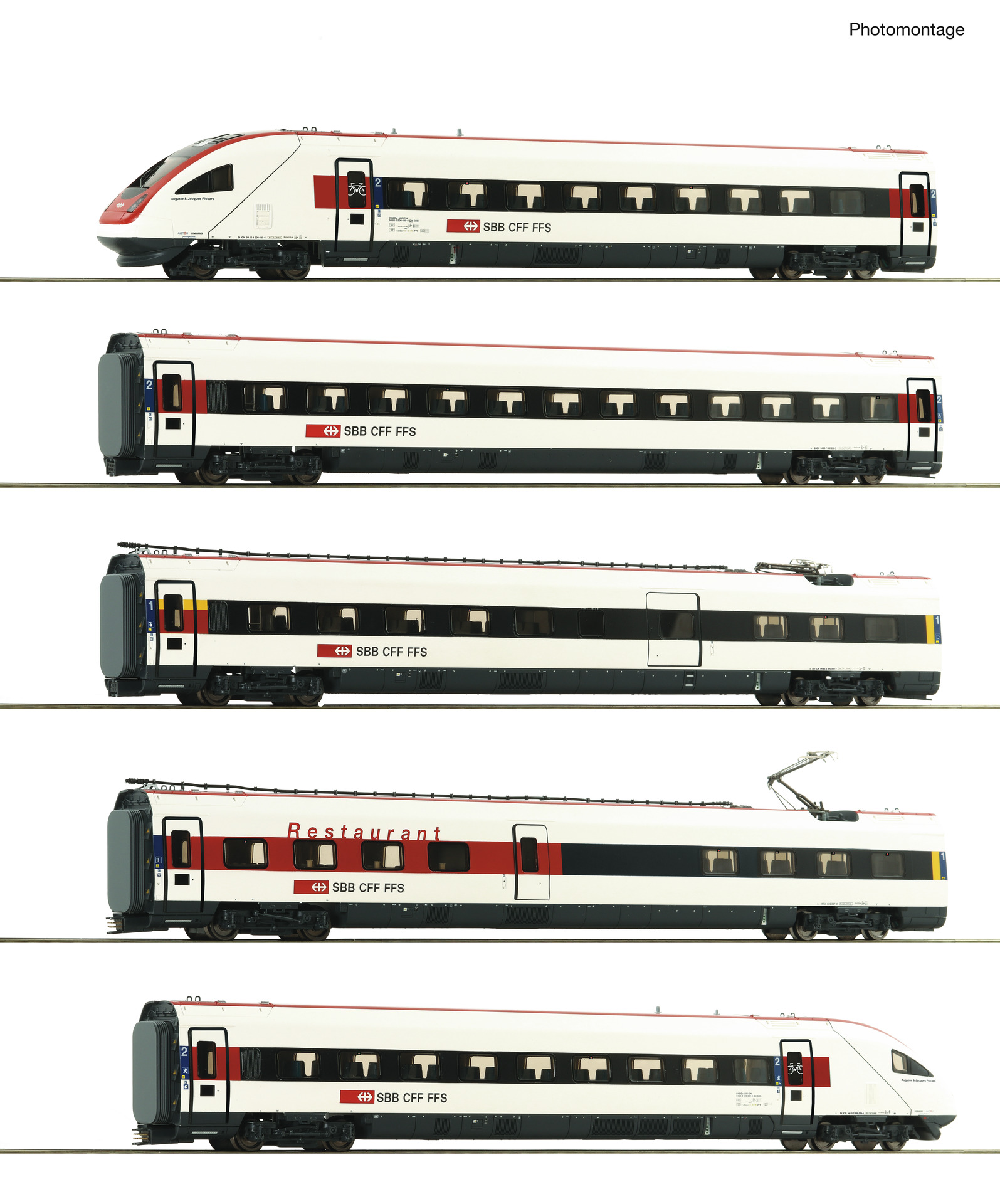
Die Grundgarnitur des Hochgeschwindigkeits-Triebzuges RABe 501 Giruno finden Sie in Gleichstromausführung im Trix H0-Sortiment unter der Artikelnummer 25811. Ab 15 Jahre. WEEE-Nummer: DE30519521 SBB RABe 501 Giruno, CH-I,VI. Class RABe 501 Giruno High-Speed Rail Car Train Era VI Prototype: Swiss Federal Railways (SBB) EC 250 electric high-speed rail car train as the class RABe 501 Giruno. 1 type A (Bt1) end car, 2nd class. 1 type D (B9) intermediate car, 2nd class, with a pantograph. 1 type E (B8) intermediate car, 2nd class. 1 type F (B7) intermediate car, 2nd class, with handicapped entries and a pantograph. 1 type G (WR61), with a dining area. 1 type H (A5) intermediate car, 1st class, with handicapped entries and a pantograph. 1 type L (At2) end car, 1st class. Permission planned for use in Germany and Austria. Train number RABe 501 004. Presentation train with striking Swiss/Italian design on the end cars. The train looks as it did around 2018/2019.
Model: This is a 7-part basic set. The dining car G and the two intermediate cars F and H arranged on the left and right are coupled permanently to each other with Jakobs trucks. The train has an mfx+ digital decoder and extensive sound and light functions. It also has controlled, high-efficiency propulsion with a flywheel, centrally mounted in the dining car. All 4 axles in both Jakobs trucks on the left and right of the dining car are powered using cardan shafts. Traction tires. The cabs in the end cars have interior details. Current pickup is done from the end car at the front of the train and changes with the direction of travel. There is a guide mechanism in the Jakobs trucks. Triple headlights and dual red marker lights change over with the direction of travel, will work in conventional operation, and can be controlled digitally. The train can be switched to a white marker light (Swiss headlight / marker light code). There are additional separately controlled light functions. The train has factory-installed interior lighting. The interior lighting is supplied with power from a continuous electrical connection throughout the entire train. The cab and control desk lighting are also each controlled separately in digital operation. Maintenance-free warm white and red LEDs are used for all of the lighting. The pantographs on the D, F, and H intermediate cars can each be raised and lowered separately as a digital function. The train is modelled true-to-scale. The minimum radius for operation is 360 mm / 14-3/16. Length of the basic set approximately 152 cm / 59-7/8.
The 39811 7-part basic set can be expanded to a prototypical 11-part powered rail car train with the 43466 and 43467 2-part add-on car sets.
The basic set of the class RABe 501 Giruno high-speed rail car train can be found in a DC version in the Trix H0 assortment under item number 25811.. From 15 years of age. Epoche 6 . SBB RABe 501 Giruno, CH-I,VI. Modèle réel : Rame automotrice électrique à grande vitesse EC 250 en tant que RABe 501 Giruno des Chemins de fer fédéraux suisses (CFF). 1 voiture d'extrémité A (Bt1), 2nde classe. 1 voiture centrale D (B9), 2nde classe avec pantographe. 1 voiture centrale E (B8), 2nde classe. 1 voiture intermédiaire F (B7), 2nde classe, avec accès pour handicapés et pantographe. 1 voiture intermédiaire G (WR6), avec espace restaurant. 1 voiture intermédiaire H (A5), 1ère classe, avec accès pour handicapés et pantographe. 1 voiture d'extrémité L (At2), 1ère classe. Avec autorisation prévue également pour l'Allemagne et l'Autriche. Numéro de train : RABe 501 004. Train de présentation, avec un décor Suisse/Italie voyant sur les voitures d'extrémité. Etat de service vers 2018/19.
Modèle réduit : Rame de base à 7 éléments. La voiture restaurant G et les deux voitures centrales F et H disposées à gauche et à droite sont couplées de manière fixe via les bogies Jakobs. Avec décodeur numérique mfx+ et nombreuses fonctions de bruitage et d'éclairage. Moteur régulé haute performance avec volant d'inertie installé au centre de la voiture restaurant. Les 4 essieux des deux bogies Jakobs à gauche et à droite de la voiture restaurant sont entraînés par cardan. Bandages d'adhérence. Postes de conduite des voitures d'extrémité avec aménagement intérieur. Alimentation en courant en fonction du sens de marche via la voiture d'extrémité respectivement en tête. Guidage à coulisses dans les bogies Jakobs. Fonction permanente du fanal à trois feux et des deux feux rouges de fin de convoi - inversion en fonction du sens de marche - en mode d'exploitation conventionnel, sélection possible en mode numérique. Commutation possible sur un feu blanc de fin de convoi (inversion selon réglementation suisse). Sélection distincte d'autres fonctions d'éclairage possible. Éclairage intérieur intégré de série. L'éclairage intérieur est alimenté par la liaison électrique continue de l'ensemble de la rame. Sélection distincte de l'éclairage de la cabine de conduite et du pupitre de commande possible en mode numérique. L'ensemble de l'éclairage est assuré par des diodes électroluminescentes (LED) blanc chaud et rouges sans entretien. Les pantographes unijambistes sur les voitures centrales D, F et H peuvent être relevés et abaissés séparément via fonction numérique. Reproduction à l'échelle. Rayon minimal d'inscription en courbe : 360 mm. Longueur approximative de la rame de base : 152 cm.
La rame de base à 7 éléments réf. 39811 peut être complétée par les coffrets de voitures complémentaires à 2 éléments réf. 43466 et 43467 pour former une rame automotrice réaliste de 11 éléments.
Vous trouverez la rame de base du train automoteur à grande vitesse RABe 501 Giruno en version pour courant continu dans la gamme Trix H0 sous la réf. 25811.. Dès l'âge de 15 ans.
Modell: Mit Digital-Decoder mfx und umfangreichen Geräuschfunktionen. Geregelter Hochleistungsantrieb mit Schwungmasse, zwei Achsen angetrieben. Haftreifen. Fahrtrichtungsabhängig wechselndes Dreilicht-Spitzensignal und zwei rote Schlusslichter, konventionell in Betrieb, digital schaltbar. Doppel-A-Lichtfunktion. Serienmäßig eingebaute Innenbeleuchtung. Beleuchtung mit wartungsfreien warmweißen und roten Leuchtdioden (LED). Viele separat angesetzte Details. An beiden Enden mit separat angesetzter Imitation einer Scharfenbergkupplung. Für einen Doppeltraktionsbetrieb liegen geöffnete Blenden und eine Kuppelstange bei. Befahrbarer Mindestradius 360 mm ohne Beachtung des Lichtraumprofils. Länge über Kupplung 29,3 cm.
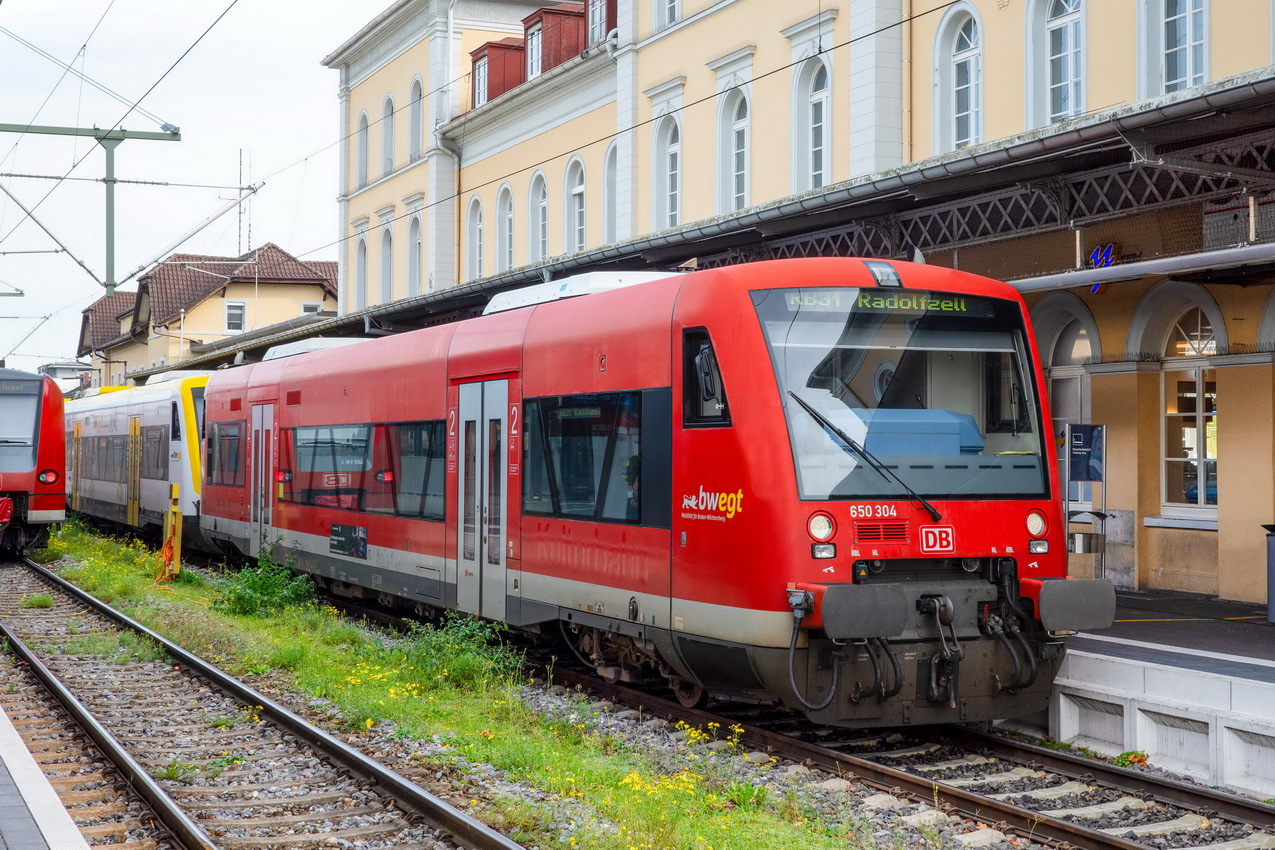
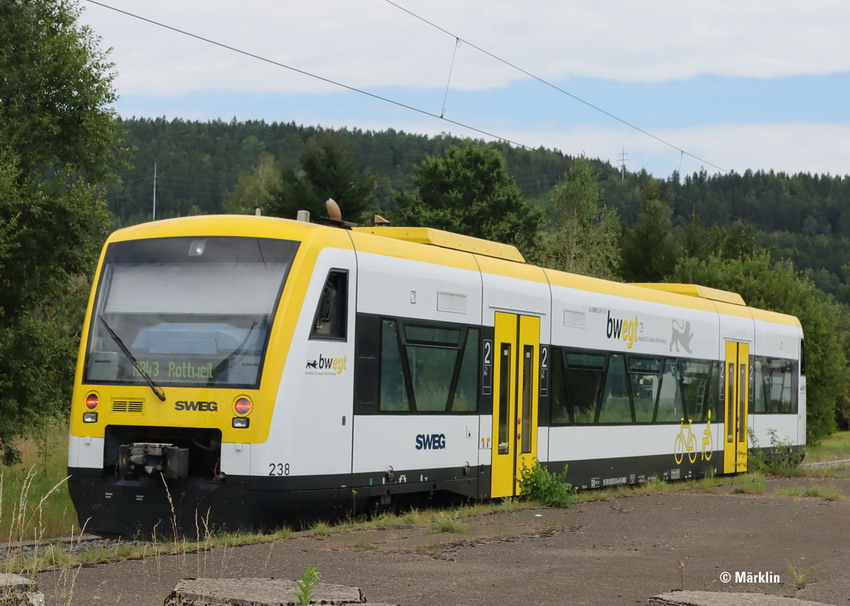
Weitere Varianten des Regio Shuttle mit unterschiedlichen Ausführungen der Fronten finden Sie unter Artikelnummer 36965 und 36967.Diesen Dieseltriebwagen finden Sie in Gleichstromausführung im Trix H0-Sortiment unter der Artikelnummer 25966. Ab 15 Jahre. WEEE-Nummer: DE30519521 SWEG RS Diesel Car Era VI. Regio Shuttle RS1 Class 650 Diesel Powered Rail Car Era VI Prototype: Southwest German Provincial Transportation, Inc. (SWEG) type Regio Shuttle RS1 class 650 diesel powered rail car. Version with Scharfenberg couplers and low mounted train destination signs. Paint scheme in the provincial design of Baden-Württemberg (bwegt). Road number 238 (NVR Number: 95 80 0 650 634-8 D-SWEG). The rail car looks as it did starting in 2024.
Model: The rail car has an mfx digital decoder and extensive sound functions. It also has controlled high-efficiency propulsion with a flywheel. Two axles powered. Traction tires. Triple headlights and dual red marker lights change over with the direction of travel, will work in conventional operation, and can be controlled digitally. There is a double A light function. There is factory-installed interior lighting. Maintenance-free warm white and red LEDs are used for the lighting. There are many separately applied details. There are separately applied imitations of Scharfenberg couplers at both ends of the rail car. Open panels and a coupling rod are included for double unit operation. Minimum radius for operation 360 mm / 14-3/16 disregarding the clearance gauge. Length over the buffers 29.3 cm / 11-1/2.
Additional variations of the Regio Shuttle with different versions of the ends can be found under item numbers 36965 and 36967.This diesel powered rail car can be found in a DC version in the Trix H0 assortment under item number 25966.. From 15 years of age. Epoche 6 . Automotrice diesel RS SWEG,VI. Modèle réel : Automotrice diesel type Regio Shuttle RS1 en tant que série 650 de la société allemande Südwestdeutsche Landesverkehrs-GmbH (SWEG). Version avec attelage Scharfenberg et affichage inférieur de la destination du train. Livrée selon design du Land de Bade-Wurtemberg (bwegt). Numéro d'immatriculation : 238 (numéro NVR : 95 80 0 650 634-8 D-SWEG). Etat de service à partir de 2024.
Modèle réduit : Avec décodeur numérique mfx et nombreuses fonctions sonores. Motorisation régulée haute performance avec volant d'inertie, deux essieux moteurs. Bandages d'adhérence. Fonction permanente du fanal à trois feux et des deux feux rouges de fin de convoi (inversion en fonction du sens de marche) en mode d'exploitation conventionnel, sélection possible en mode numérique. Fonction double feu A. Éclairage assuré par diodes électroluminescentes (LED) blanc chaud et rouges sans entretien. Nombreux détails rapportés. Aux deux extrémités, imitation d'un attelage Scharfenberg rapportée. Pour une exploitation en double traction, des caches ouverts ainsi qu'une barre d'attelage sont fournis. Rayon minimal d'inscription en courbe : 360 mm sans tenir compte du gabarit de libre passage. Longueur hors attelage : 29,3 cm.
Vous trouverez d'autres variantes du Regio Shuttle avec des versions différentes des faces frontales sous les réf. 36965 et 36967.Cette automotrice diesel est disponible en version pour système 2 rails c.c. dans la gamme Trix H0, sous la réf. 25966.. Dès l'âge de 15 ans.
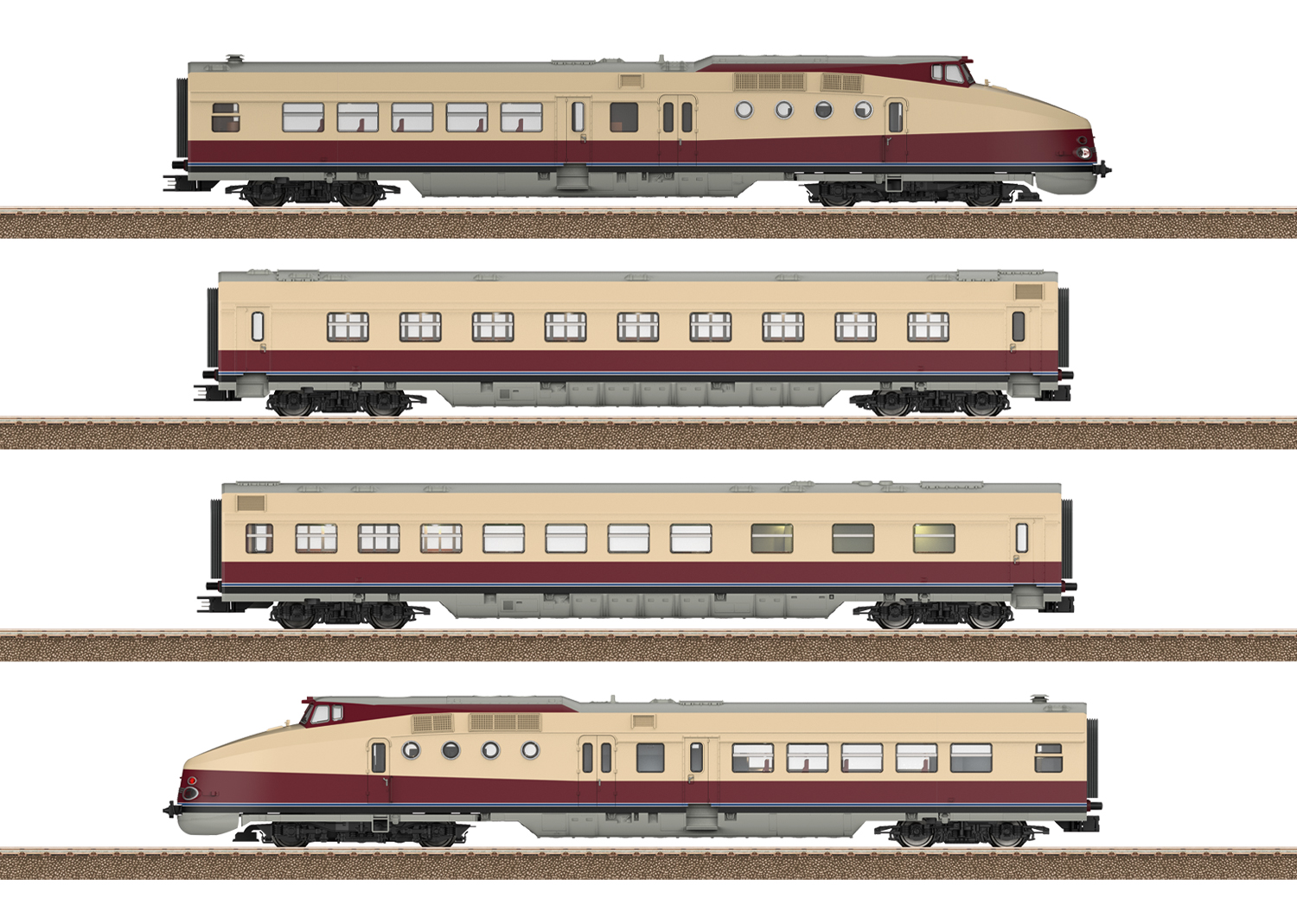
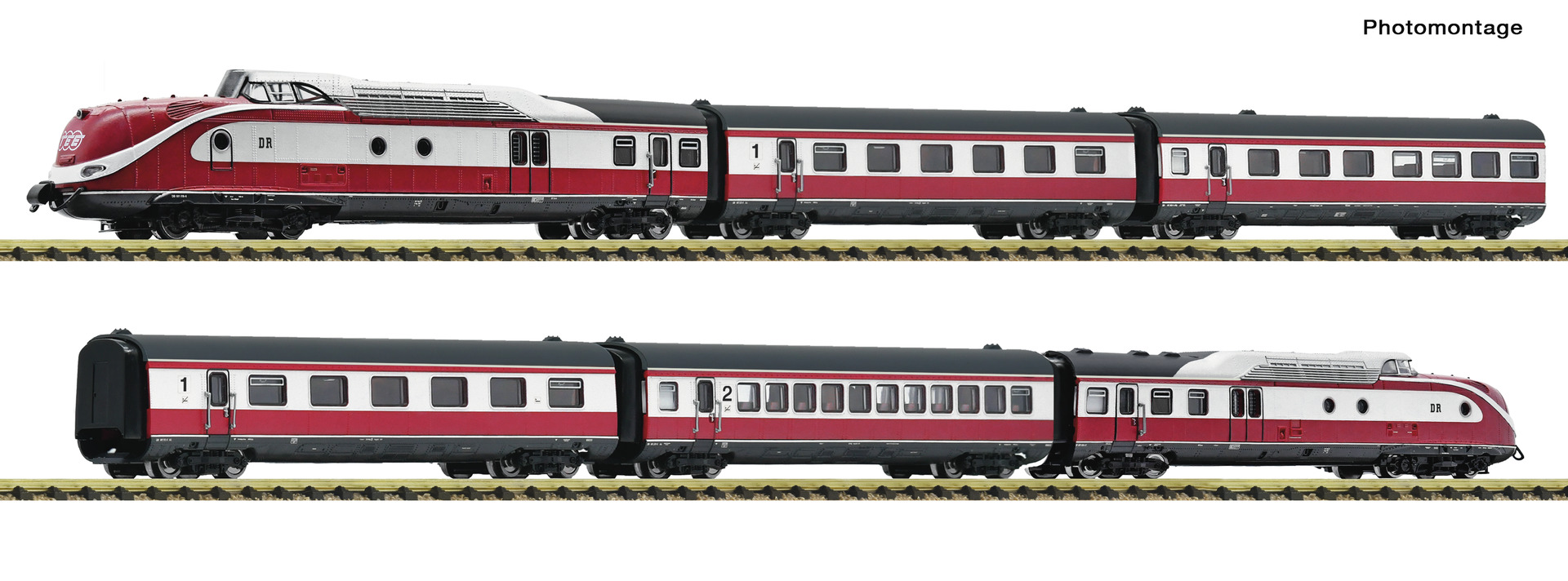
Elegant, schnell und luxuriös: Der Schnelltriebwagen der Bauart Görlitz stand einst für ein neues Reiseerlebnis auf Schienen. Er war das Prunkstück der Deutschen Reichsbahn der DDR, versprühte internationales Flair und er erfüllte nicht nur die Eisenbahner mit großem Stolz. Drei dieser elfenbein-roten Schienenstars sind erhalten geblieben. Seit 2003 gibt es aber kein betriebsfähiges Exemplar mehr, die schmucken Züge standen ungeschützt im Freien und es drohte ein langsamer Verfall. Dann traten ehemalige Reichsbahner und SVT-Fans auf den Plan und gründeten 2019 eine gemeinnützige gGmbH. Seither wird mit viel Herzblut und großem Sachverstand daran gearbeitet, einen kompletten Zug in altem Glanz erstrahlen zu lassen und als fahrende Legende erlebbar zu machen. Das Projekt steht unter dem Motto ?Ein Zug für Mitteldeutschland? und soll die Verbundenheit mit der mitteldeutschen Region zum Ausdruck bringen. Und als ?Botschafter in Europa? wird dieser Renner an die große Zeit der luxuriösen internationalen Züge erinnern. Unternehmen Sie mit dem neuen Märklin-Modell eine Reise in eine Epoche, als schnittige Schnelltriebwagen wie der SVT Görlitz Zugläufe mit klangvollen Namen fuhren ? als Neptun nach Kopenhagen, als Vindobona nach Wien und als Karlex in den Nobelkurort Karlsbad.
Vorbild: Diesel-Schnelltriebwagenzug Baureihe VT 18.16 (Bauart SVT Görlitz), im Zustand der wiederaufbereiteten Museumsgarnitur durch die SVT Görlitz gGmbH. Angelehnt an die Ausführung der Deutschen Reichsbahn der DDR (DR/DDR) aus den 1960er und 1970er Jahren, als Aushängeschild für den internationalen Schnellverkehr. 4-teilige Einheit. 1 Triebkopf VTa, 1 Mittelwagen VMc mit Speiseraum und Küche, 1 Mittelwagen VMd, 1 Triebkopf VTb. Aktueller Betriebszustand ab 2025/26.
Modell: 4-teilige Einheit. Mit Digital-Decoder mfx+ und umfangreichen Geräusch- und Lichtfunktionen. Geregelter Hochleistungsantrieb mit Schwungmasse in einem Triebkopf, alle vier Achsen über Kardan angetrieben. Haftreifen. Serienmäßig eingebaute LED-Innenbeleuchtung, Führerstandbeleuchtung, Führerpultbeleuchtung, Maschinenraumbeleuchtung, Beleuchtung Küchen-Bereich und Wandlampen im Speiseraum jeweils digital schaltbar. Fahrtrichtungsabhängig wechselndes Dreilicht-Spitzensignal, zwei rote Schlusslichter und Innenbeleuchtung konventionell in Betrieb, digital schaltbar. Gesamte Beleuchtung mit wartungsfreien warmweißen und roten Leuchtdioden (LED). Mehrteilige Inneneinrichtungen. Kulissengeführte mehrpolige stromführende Spezialkupplungen zwischen den Fahrzeugen. Schleiferumschaltung mit fahrtrichtungsabhängiger Stromversorgung über den jeweils vorderen Triebkopf. Mit Pufferspeicher. Viele angesetzte Details. An beiden Enden Nachbildung der automatischen Kupplung (ohne Funktion). Befahrbarer Mindestradius 360 mm. Länge der 4-teiligen Garnitur ca. 113 cm.
Märklin unterstützt den Wiederaufbau dieses legendären Triebzuges mit einer Spende von 25.000,-- Euro.
Dieses Modell finden Sie in Gleichstrom-Ausführung im Trix H0-Sortiment unter der Artikelnummer 25175. Ab 15 Jahre. WEEE-Nummer: DE30519521 DR/GDR Cl. VT 18.16 Tr. E. VI. Class VT 18.16 Diesel Express Powered Rail Car Train Era VI The VT 18.16 ? a Train for Central Germany
Elegant, swift, and luxurious: The class Görlitz express powered rail car once stood for a new travel experience by rail. It was the showpiece of the GDR's German State Railroad, exuded international flair, and it filled more than railroaders with a great deal of pride. Three of these ivory/red stars of the rails have been preserved. Since 2003 there has not be an operational unit. These decorative trains have stood unprotected outdoors and slow decay has threatened. Then, former German State Railroad people and SVT fans agreed on a plan and established a non-profit corporation in 2019. Since then, much toil and expertise has been poured into the project of producing a complete train in the old glamor a
Modell: 5-teilige Grundgarnitur. Restaurantwagen G und die beiden links und rechts angeordneten Mittelwagen F und H sind über die Jakobs-Drehgestelle fest miteinander gekuppelt. Mit Digital-Decoder mfx+ und umfangreichen Geräusch- und Lichtfunktionen. Geregelter Hochleistungsantrieb mit Schwungmasse im Restaurantwagen zentral eingebaut. Alle 4 Achsen in beiden Jakobs-Drehgestellen links und rechts des Restaurantwagens über Kardan angetrieben. Haftreifen. Führerstände der Endwagen mit Inneneinrichtung. Fahrtrichtungsabhängige Stromversorgung über den jeweils vorderen Endwagen. Kulissenführung in den Jakobs-Drehgestellen. Fahrtrichtungsabhängig wechselndes Dreilicht-Spitzensignal und zwei rote Schlusslichter, konventionell in Betrieb, digital schaltbar. Umschaltbar auf ein weißes Schlusslicht (Schweizer Lichtwechsel). Weitere separat schaltbare Lichtfunktionen. Serienmäßig eingebaute Innenbeleuchtung. Innenbeleuchtung wird versorgt über die durchgehende elektrische Verbindung des ganzen Zuges. Zusätzlich Führerstand- und Fahrpult-Beleuchtung jeweils separat digital schaltbar. Gesamte Beleuchtung mit wartungsfreien warmweißen und roten Leuchtdioden (LED). Stromabnehmer auf den Mittelwagen F und H jeweils als Digital-Funktion separat heb- und senkbar. Maßstäbliche Nachbildung. Befahrbarer Mindestradius 360 mm. Länge der Grundgarnitur ca. 112 cm.
Die 5-teilige Grundgarnitur 39812 kann mit den 2-teiligen Ergänzungswagen-Sets 43451, 43452 und 43453 zu einem vorbildgerechten 11-teiligen Triebzug erweitert werden. Ab 15 Jahre. WEEE-Nummer: DE30519521 SBB RABe 501 022 Giruno E. VI. Class RABe 501 Giruno High-Speed Rail Car Train Prototype: Swiss Federal Railways (SBB) EC 250 electric high-speed rail car train as the class RABe 501 “Giruno”. 1 type A (Bt1) end car, 2nd class. 1 type F (B7) intermediate car, 2nd class, with handicapped entries and a pantograph. 1 type G (WR6) intermediate car, with a dining area. 1 type H (A5), 1st class, with handicapped entries and a pantograph. 1 type L (At2) end car, 1st class. Multiple system powered railcar train. Reproduction of the EC 151, with cross border train route: Frankfurt/Main – Freiburg – Basle – Zürich – Milan Central. Train number RABe 501 022, with the coat-of-arms of the Canton of Vaud. The train looks as it did around 2024.
Model: This is a 5-part basic set. The dining car G and the two intermediate cars F and H arranged on the left and right are coupled permanently with Jakobs trucks. The train has an mfx+ digital decoder and extensive sound and light functions. It also has controlled, high-efficiency propulsion with a flywheel, centrally mounted in the dining car. All 4 axles in both Jakobs trucks on the left and right of the dining car are powered using cardan shafts. Traction tires. The cabs in the end cars have interior details. Current pickup is done from the end car at the front of the train and changes with the direction of travel. There is a guide mechanism in the Jakobs trucks. Triple headlights and dual red marker lights change over with the direction of travel, will work in conventional operation, and can be controlled digitally. The train can be switched to a white marker light (Swiss headlight / marker light code). There are additional separately controlled light functions. The train has factory-installed interior lighting. The interior
Modell: Mit Digital-Decoder mfx+ und umfangreichen Geräusch- und Lichtfunktionen. Geregelter Hochleistungsantrieb mit Schwungmasse. Über Kardan 2 Treibachsen im Motortriebdrehgestell angetrieben. Haftreifen. Fahrtrichtungsabhängig wechselndes Zweilicht-Spitzensignal und zwei rote Schlusslichter konventionell in Betrieb, digital schaltbar. Spitzensignal vorne und hinten jeweils separat digital abschaltbar. Zusätzlich Führerstandbeleuchtung vorne und hinten jeweils separat digital schaltbar. Außerdem sind Gepäckraumbeleuchtung, Gang-, WC-, Schlafabteil- und Spindraum-Beleuchtung jeweils separat digital schaltbar. Beleuchtung mit wartungsfreien warmweißen und roten Leuchtdioden (LED). Bewegliches Lüfterrad. Lüfterradantrieb separat digital schaltbar. Auf beiden Seiten stromführende Kurzkupplungen. Damit kann die Innenbeleuchtung von angehängten Personenwagen über die stromführende Kurzkupplung des Triebwagens separat digital geschaltet werden. Frontschürzen austauschbar für Ausführung ohne eingesteckte Kurzkupplungen. Detaillierte Pufferbohle. Ansteckbare Bremsschläuche, Schraubenkupplungsimitationen und Heizleitungen liegen bei. Zusätzlich können die angebrachten Pufferverkleidungen, die für einen sicheren Fahrbetrieb mit angehängten Wagen notwendig sind, gegen Pufferverkleidungen in vorbildgerechter Höhe getauscht werden.Länge über Puffer 25,1 cm. Ab 15 Jahre. WEEE-Nummer: DE30519521 MHI Meeting 2024, VT 92.5. Class VT 92.5 Salon Powered Rail Car Prototype: German Federal Railroad (DB) class VT 92.5 four-axle diesel-powered rail car as a salon powered rail car. Steel blue basic paint scheme. Buffer cladding included. Powered rail car road number VT 92 502 based on the F-Zug network of fast trains. The car looks as it fictitiously did around 1956.
Model: The unit has an mfx+ digital decoder and extensive sound and light functions. It also has controlled high-efficiency propulsion with a flywheel. Two axles in the motor truck are powered using a cardan shaft. Traction tires. Dual headlights and dual red marker lights change over with the direction of travel, will work in conventional operation, and can be controlled digitally. The headlights and marker lights front and rear can be controlled separately in digital operation. Cab lighting front and rear can also be controlled separately in digital operation. In addition, baggage area lighting, corridor lighting, restroom lighting, sleeping compartment lighting, and locker room lighting can be controlled separately in digital operation. Maintenance-free, warm white and red LEDs are used for the lighting. A working ventilation propeller fan is included. The ventilation propeller fan mechanism can be controlled separately in digital operation. Current-conducting close couplers are included at both ends. Interior lighting for passenger cars coupled to this unit can be controlled separately in digital operation using the current-conducting close coupler on the powered rail car. End skirting is included and can be installed for a version of the powered rail car without plugged in close couplers. The powered rail car has detailed buffer beams. Brake hoses, imitation prototype couplers, and heating lines, which can be installed on the unit, are included. In addition, the buffer cladding installed on this unit, which is necessary for reliable operation with cars coupled to it, can be swapped with buffer cladding of prototypical height.Length over the buffers 25.1 cm / 9-7/8.. From 15 years of age. . AG MHI 2024, VT 92.5. Modèle réel : Automotrice diesel à quatre essieux en tant que voiture-salon, série VT 92.5 de la Deutsche Bundesbahn (DB). Livrée de base bleu acier. Avec carénage des tampons. Numéro d'immatriculation de l'automotrice : VT 92 502 en référence au réseau des trains rapides. Etat de service fictif vers 1956.
Modèle réduit : Avec décodeur numérique mfx+ et nombreuses fonctions sonores et lumineuses. Motorisation régulée haute performance avec volant d'inertie. Deux essieux moteurs entraînés par cardan dans le bogie moteur. Bandages d'adhérence. Fonction permanente du fanal à deux feux et des deux feux rouges de fin de convoi (inversion en fonction du sens de marche) en mode d'exploitation conventionnel, sélection possible en mode numérique. Sélection distincte du fanal à l'avant et à l'arrière possible en mode numérique. Sélection distincte de l'éclairage du poste de conduite à l'avant et à l'arrière possible en mode numérique. Sélection distincte de l'éclairage compartiment à bagages, du couloir, des toilettes, du compartiment couchette et du vestiaire possible en mode numérique. Éclairage assuré par diodes électroluminescentes (LED) blanc chaud et rouges sans entretien. Roue de ventilateur fonctionnelle. Sélection distincte du moteur de la roue du ventilateur possible en mode numérique. Attelages courts conducteurs de courant des deux côtés. L'éclairage intérieur des voitures voyageurs attelées peut ainsi être commuté séparément en mode numérique via l'attelage court conducteur de courant de l'automotrice. Tabliers frontaux interchangeables pour la version sans attelages courts enfichés. Traverse porte-tampons détaillée. Boyaux de frein enfichables, imitations d'attelage à vis et conduites de chauffage fournis. De plus, les carénages des tampons rapportés, nécessaires pour une exploitation fiable avec voitures attelées, peuvent être remplacés par des carénages de tampons d'une hauteur conforme à l'équipement reproduit.Longueur h.t. : 25,1 cm.. Dès l'âge de 15 ans.
Modell: Mit Digital-Decoder mfx und umfangreichen Geräuschfunktionen. Geregelter Hochleistungsantrieb mit Schwungmasse, zwei Achsen angetrieben. Haftreifen. Fahrtrichtungsabhängig wechselndes Dreilicht-Spitzensignal und zwei rote Schlusslichter, konventionell in Betrieb, digital schaltbar. Doppel-A-Lichtfunktion. Serienmäßig eingebaute Innenbeleuchtung. Beleuchtung mit wartungsfreien warmweißen und roten Leuchtdioden (LED). Viele separat angesetzte Details. An beiden Enden mit separat angesetzten Bremsschläuchen, Schraubenkupplungen und Steuerleitungen. Pufferhöhe nach NEM. Für einen Doppeltraktionsbetrieb liegen geöffnete Blenden, kürzere Steuerleitungen und eine Kuppelstange bei. Befahrbarer Mindestradius 360 mm ohne Beachtung des Lichtraumprofils. Länge über Puffer 29,3 cm.
Weitere Varianten des Regio Shuttle mit unterschiedlichen Ausführungen der Fronten finden Sie unter Artikelnummer 36966 und 36967.Diesen Dieseltriebwagen finden Sie in Gleichstromausführung im Trix H0-Sortiment unter der Artikelnummer 25965. Ab 15 Jahre. WEEE-Nummer: DE30519521 DB Cl. 650 Diesel Car E. VI. Regio Shuttle RS1 Class 650 Diesel Powered Rail Car Era VI Prototype: German Railroad, Inc. (DB AG) type Regio Shuttle RS1 class 650 diesel powered rail car. Version with prototype couplers, buffers, and train destination signs mounted above. Traffic red basic paint scheme. Road number 650 020-0. The rail car looks as it did starting in 2015.
Model: The rail car has an mfx digital decoder and extensive sound functions. It also has controlled high-efficiency propulsion with a flywheel. Two axles powered. Traction tires. Triple headlights and dual red marker lights change over with the direction of travel, will work in conventional operation, and can be controlled digitally. There is a double A light function. There is factory-installed interior lighting. Maintenance-free warm white and red LEDs are used for the lighting. There are many separately applied details. There are separately applied brake hoses, prototype couplers, and control lines at both ends of the rail car. The buffer height conforms to the NEM. Open panels, shorter control lines, and a coupling rod are included for double unit operation. Minimum radius for operation 360 mm / 14-3/16 disregarding the clearance gauge. Length over the buffers 29.3 cm / 11-1/2.
Additional variations of the Regio Shuttle with different versions of the ends can be found under item numbers 36966 and 36967.This diesel powered rail car can be found in a DC version in the Trix H0 assortment under item number 25965.. From 15 years of age. Epoche 6 . Automotr. diesel BR 650,DB,VI. Modèle réel : Automotrice diesel type Regio Shuttle RS1 en tant que série 650 de la Deutsche Bahn AG (DB AG). Version avec attelage à vis, tampons et affichage supérieur de la destination du train. Livrée de base rouge trafic. Numéro d'immatriculation : 650 020-0. Etat de service à partir de 2015.
Modèle réduit : Avec décodeur numérique mfx et nombreuses fonctions sonores. Motorisation régulée haute performance avec volant d'inertie, deux essieux moteurs. Bandages d'adhérence. Fonction permanente du fanal à trois feux et des deux feux rouges de fin de convoi (inversion en fonction du sens de marche) en mode d'exploitation conventionnel, sélection possible en mode numérique. Fonction double feu A. Éclairage assuré par diodes électroluminescentes (LED) blanc chaud et rouges sans entretien. Nombreux détails rapportés. Aux deux extrémités, boyaux de frein, attelages à vis et câbles de commande rapportés séparément. Hauteur des tampons conforme aux normes NEM. Pour une exploitation en double traction, des caches ouverts, des câbles de commande plus courts ainsi qu'une barre d'attelage sont fournis. Rayon minimal d'inscription en courbe : 360 mm sans tenir compte du gabarit de libre passage. Longueur h.t. : 29,3 cm.
Vous trouverez d'autres variantes du Regio Shuttle avec des versions différentes des faces frontales sous les réf. 36966 et 36967.Cette automotrice diesel est disponible en version pour système 2 rails c.c. dans la gamme Trix H0, sous la réf. 25965.. Dès l'âge de 15 ans.
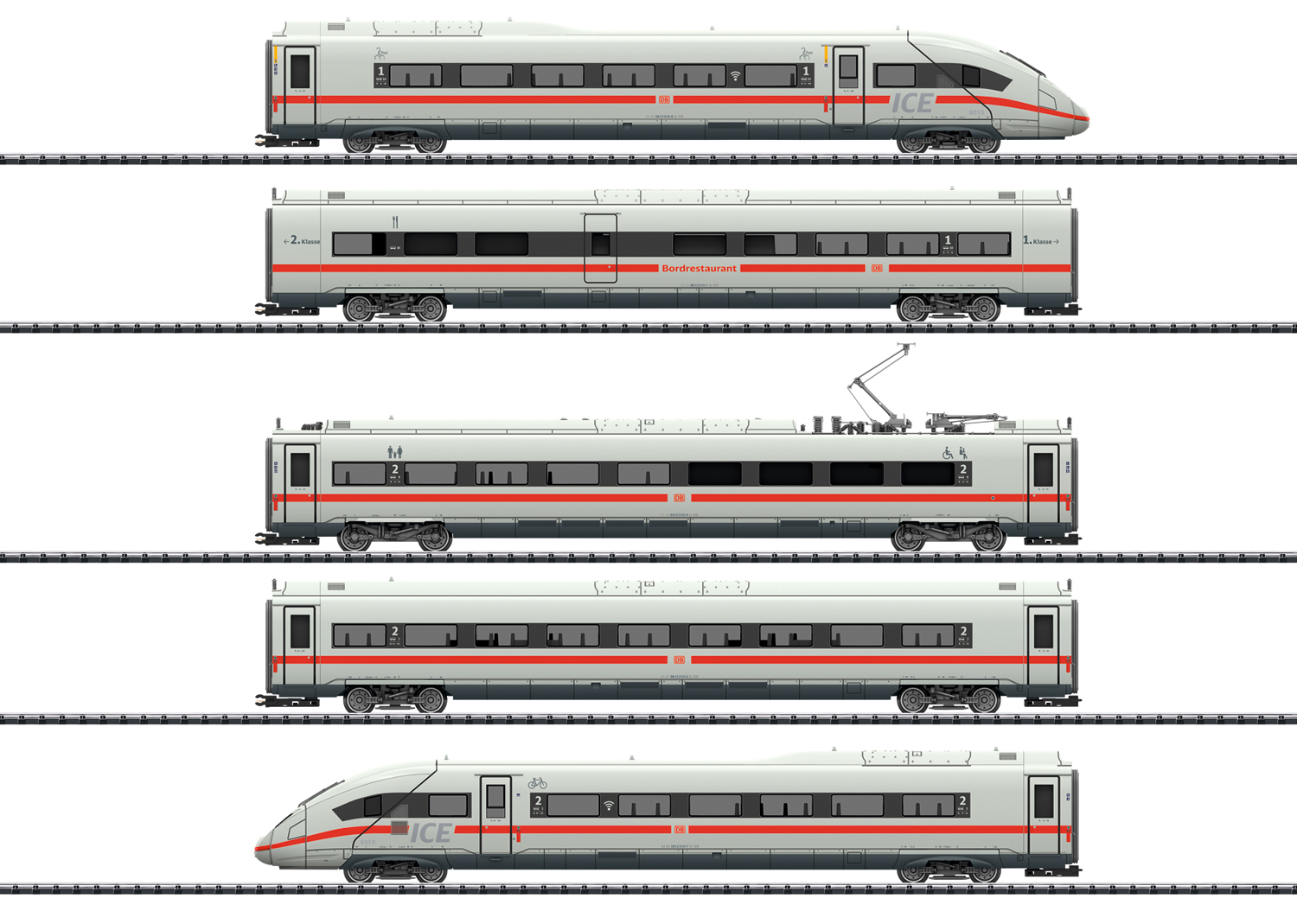
Vorbild: Hochgeschwindigkeitszug ICE 4 als Baureihe 412/812 der Deutschen Bahn AG (DB AG). 1 Endwagen EW 1.2-H, Baureihe 812, 1. Klasse. 1 Speisewagen RW Bordrestaurant, Baureihe 812, 1. Klasse. 1 Servicewagen TW 2.2, Baureihe 412, 2. Klasse. 1 Mittelwagen MW 2-H, Baureihe 812, 2. Klasse. 1 Endwagen EW 2.2-H, Baureihe 812, 2. Klasse. Betriebszustand 2019.
Modell: 5-teilige Ausführung im Längenmaßstab 1:93,5. Mit Digital-Decoder mfx+ und umfangreichen Geräusch- und Lichtfunktionen. Geregelter Hochleistungsantrieb mit Schwungmasse im Bordrestaurantwagen zentral eingebaut. Alle 4 Achsen in beiden Drehgestellen über Kardan angetrieben. Haftreifen. Führerstände der Endwagen mit Inneneinrichtung. Fahrtrichtungsabhängige Stromversorgung über den jeweils vorderen Endwagen. Spezial-Kurzkupplungen mit Kulissenführung. Fahrtrichtungsabhängig wechselndes Dreilicht-Spitzensignal und zwei rote Schlusslichter, konventionell in Betrieb, digital schaltbar. Serienmäßig eingebaute Innenbeleuchtung. Innenbeleuchtung wird versorgt über die durchgehende elektrische Verbindung des ganzen Zuges. Unterschiedliche Farb-Szenarien für die Innenbeleuchtung digital schaltbar. Zusäztlich Führerstand-Beleuchtung jeweils separat digital schaltbar. Gesamte Beleuchtung mit wartungsfreien warmweißen und unterschiedlich farbigen Leuchtdioden (LED). Beide Pantographen auf dem Servicewagen als Digital-Funktion separat heb- und senkbar. Befahrbarer Mindestradius 437,5 mm. Länge des Zuges 151,5 cm.
Die 5-teilige Grundgarnitur 39718 kann mit dem 3-teiligen Ergänzungswagen-Set 43726 sowie dem einzelnen Mittelwagen 43728 erweitert werden.
Die Grundgarnitur des Hochgeschwindigkeitszuges ICE 4 finden Sie in Gleichstromausführung im Trix H0-Sortiment unter der Artikelnummer 25978. Ab 15 Jahre. WEEE-Nummer: DE30519521 DB AG ICE 4, 5-Pc. Red Era VI. ICE 4 Class 412/812 Powered Railcar Train Era VI The Flagship of Long-Distance Service
Prototype: German Railroad, Inc. (DB AG) ICE 4 high-speed train as the class 412/812. 1 type EW 1.2-H end car, class 812, 1st class. 1 type RW Bordrestaurant dining car, class 812, 1st class. 1 type TW 2.2 service car, class 412, 2nd class. 1 type MW 2-H intermediate car, class 812, 2nd class. 1 type EW 2.2-H end car, class 812, 2nd class. The train looks as it did in 2019.
Model: This is a 5-part version with a length scale of 1:93.5. The train has an mfx+ digital decoder and extensive sound and light functions. It also has controlled high-efficiency propulsion with a flywheel, centrally mounted in the Bordrestaurantwagen dining car. All 4 axles in both trucks powered by cardan shafts. Traction tires. The cabs in the end cars have interior details. The power pickup changes with the direction of travel and is always in the end car at the front of the train. The train has special close couplings with guide mechanisms. Triple headlights and dual red marker lights change over with the direction of travel, will work in conventional operation, and can be controlled digitally. The train has factory-installed interior lighting. The interior lighting is supplied with power from the continuous electrical connections for the entire train. Different color scenarios for the interior lighting can be controlled digitally. There is also cab lighting that can be controlled separately in digital operation. Maintenance-free warm white and different colored LEDs are used for all of the lighting. Both pantographs on the service car can be raised and lowered separately as a digital function. The minimum radius for operation is 437.5 mm / 17-1/4. Train length 151.5 cm / 59-5/8.
The five-piece 39718 basic train can be extended with the three-piece 43726 add-on set and the 43728 individual intermediate car.
The basic train for the ICE 4 high-speed train can be found in a DC version in the Trix H0 assortment under item number 25978.. From 15 years of age. Epoche 6 . ICE 4 5 él., rouge, DB AG, VI. Le fleuron du transport longue distance
Modèle réel : Train à grande vitesse ICE 4, série 412/812 de la Deutsche Bahn AG (DB AG). 1 voiture d'extrémité EW 1.2-H, série 812, 1ère classe. 1 voiture-restaurant RW » Bordrestaurant «, série 812, 1ère classe. 1 voiture de service TW 2.2, série 412, 2nde classe. 1 voiture intermédiaire MW 2-H, série 812, 2nde classe. 1 voiture d'extrémité EW 2.2-H, série 812, 2nde classe. Etat de service : 2019.
Modèle réduit : Version à 5 éléments à l'échelle de longueur 1/93,5. Avec décodeur numérique mfx+ et nombreuses fonctions sonores et lumineuses. Position centrale de la motorisation régulée haute performance avec volant d'inertie dans la voiture-restaurant. Les 4 essieux des deux bogies sont entraînés par cardan. Bandages d'adhérence. Postes de conduite des voitures d'extrémité avec aménagement intérieur. Alimentation électrique en fonction du sens de marche via la voiture d'extrémité respectivement placée à l'avant. Attelages courts spéciaux à élongation variable. Inversion du fanal à trois feux et des deux feux rouges de fin de convoi en fonction du sens de marche, fonction permanente en mode d'exploitation conventionnel, sélection possible en mode numérique. Éclairage intérieur intégré de série. L'éclairage intérieur est alimenté via la liaison électrique continue de l'ensemble du train. Sélection de différents scénarios de couleur pour l'éclairage intérieur possible en mode numérique. Sélection distincte de l'éclairage du poste de conduite possible en mode numérique. L'ensemble de l'éclairage est assuré par des diodes électroluminescentes (LED) blanc chaud et de différentes couleurs sans entretien. Fonction numérique permettant la commande distincte des deux pantographes sur la voiture de service peuvent. Rayon minimal d'inscription en courbe : 437,5 mm. Longueur du train 151,5 cm.
La garniture de base à 5 éléments réf. 39718 peut être complétée par le set de 3 éléments réf. 43726 et la voiture centrale réf. 43728.
Vous trouverez la garniture de base du train à grande vitesse ICE 4 en version pour système 2 rails c.c. dans la gamme Trix H0, sous la réf. 25978.. Dès l'âge de 15 ans.
Modell: Mit Digital-Decoder mfx+ und umfangreichen Licht- und Geräuschfunktionen. Geregelter Hochleistungsantrieb. Spezialmotor mit Schwungmasse und Kardanwelle zum Treibgestell. 2 Achsen angetrieben. Haftreifen. Schweizer Lichtwechsel, Dreilicht-Spitzensignal und 1 weißes Schlusslicht konventionell in Betrieb, digital schaltbar. Zusätzlich kann auf ein rotes Schlusslicht umgeschaltet werden. Serienmäßig eingebaute Innenbeleuchtung. Spitzensignal und Innenbeleuchtung mit wartungsfreien warmweißen und roten Leuchtdioden (LED). Über die Funktionstasten können zusätzlich verschiedene Umgebungsgeräusche ausgelöst werden. Länge über Puffer 25,7 cm.
Rechtzeitig zum 125-jährigen Jubiläum der Eröffnung der Oensingen-Balsthal-Bahn wurde der Schnelltriebwagen RCe 2/4 607 Roter Pfeil wieder betriebsfähig aufgearbeitet und kann heute wieder für Sonderfahrten angemietet werden.
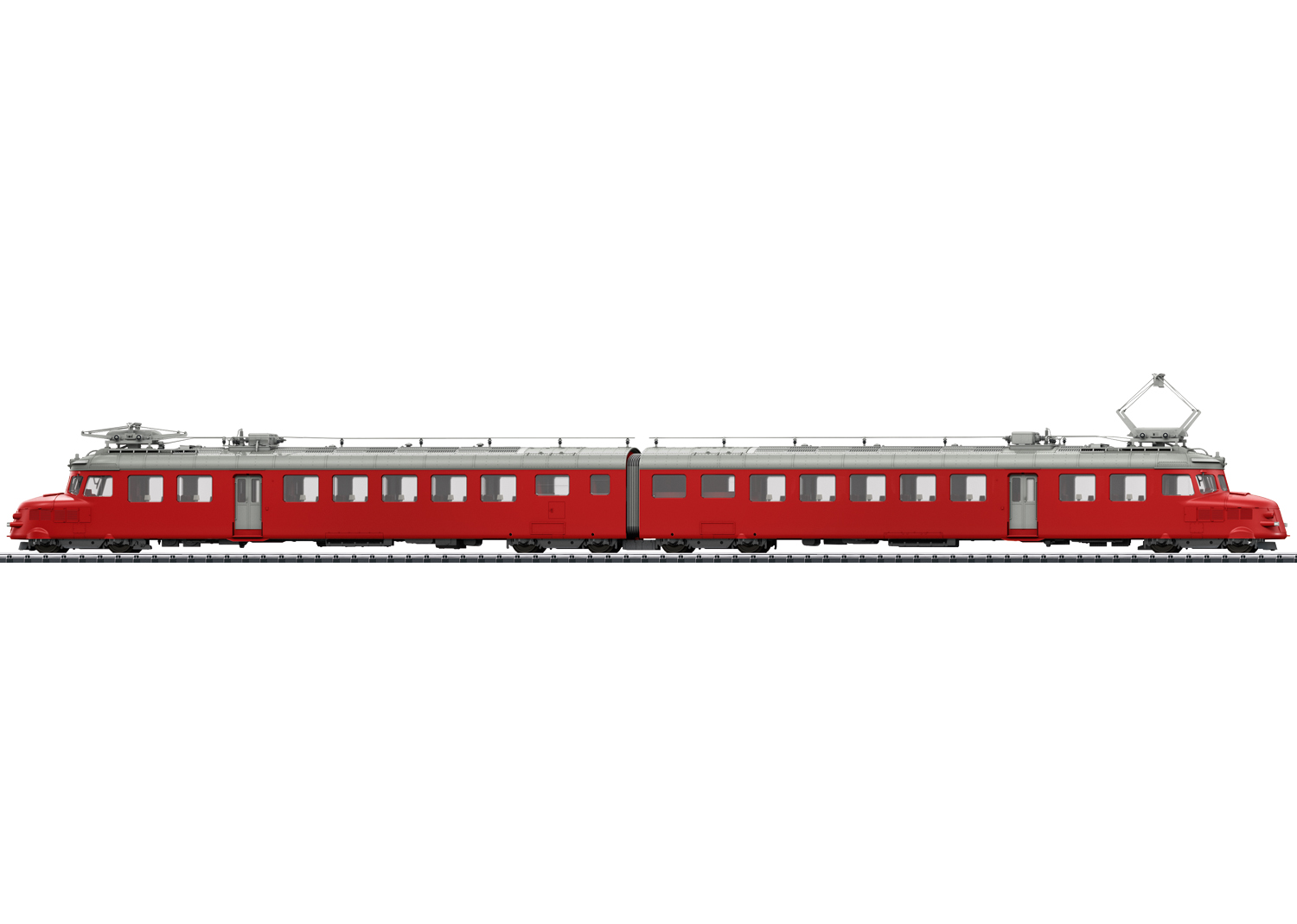
Dieses Modell finden Sie in Gleichstromausführung im Trix H0-Sortiment unter der Artikelnummer 25860. Ab 15 Jahre. WEEE-Nummer: DE30519521 OeBB Cl. RCe2/4 Red Arrow. Class RCe 2/4 Fast Powered Rail Car Era VI Prototype: Class RCe 2/4 Roter Pfeil / Red Arrow electric fast powered rail car, 3rd class, as a museum unit maintained for extra runs by the Oensingen-Balsthal Railroad, Inc. (OeBB). Overhauled to reproduce the powered rail car's external appearance in the mid-Fifties in an SBB crimson basic paint scheme. Powered rail car road number 607. The unit looks as it did in 2023.
Model: The car has an mfx+ digital decoder and extensive light and sound functions. It also has controlled, high-efficiency propulsion. There is a special motor with a flywheel and a cardan shaft to the power truck. 2 axles powered. Traction tires. The car has the Swiss light changeover, triple headlights and 1 white marker light, which will work in conventional operation, and can be controlled digitally. The white marker light can be changed to a red marker light. The car has factory-installed interior lighting. Maintenance-free, warm white and red LEDs are used for the headlights, marker lights, and interior lights. Various background sounds can be activated using function buttons. Length over the buffers 25.7 cm / 10-1/8.
The class RCe 2/4 607 Roter Pfeil / Red Arrow fast powered rail car was overhauled to be operational again just in time for the 125th anniversary of the opening of the Oensingen-Balsthal Line. This powered rail car can currently be rented again for special runs.
This model can be found in a DC version in the Trix H0 assortment under item number 25860.. From 15 years of age. Epoche 6 . Flèche rouge ÖBB, RCe2/4, VI. Modèle réel : Automotrice électrique rapide série RCe 2/4 Roter Pfeil (flèche rouge), 3ème classe, entretenue comme véhicule musée pour les trajets spéciaux par la société Oensingen-Balsthal-Bahn AG (OeBB). Remise en état, l'automotrice a l'apparence de l'engin du milieu des années 1950, en livrée de base pourpre des CFF. Numéro d'exploitation de l'automotrice 607. Etat de service 2023.
Modèle réduit : Avec décodeur numérique mfx+ et nombreuses fonctions lumineuses et sonores. Motorisation régulée haute performance. Moteur spécial avec volant d'inertie et arbre à cardan vers le bogie moteur. 2 essieux moteurs. Bandages d'adhérence. Fonction permanente du fanal à trois feux et du feu blanc de fin de convoi (inversion selon réglementation suisse) en mode d'exploitation conventionnel, sélection possible en mode numérique. Possibilité de commuter également sur un feu rouge de fin de convoi. Éclairage intérieur intégré de série. Fanal et éclairage intérieur assurés par diodes électroluminescentes (LED) blanc chaud et rouges sans entretien. Les touches de fonction permettent en outre de déclencher différents bruits d'ambiance. Longueur h.t. 25,7 cm.
L'automotrice rapide RCe 2/4 607 Roter Pfeil (flèche rouge), remise en état de marche pour le 125e anniversaire de l'inauguration du chemin de fer Oensingen-Balsthal, peut aujourd'hui à nouveau être louée pour des voyages spéciaux.
Vous trouverez ce modèle en version pour courant continu dans la gamme Trix H0, sous la réf. 25860.. Dès l'âge de 15 ans.
Krokodil, Adler oder Storchenbein ? Modelle, die untrennbar mit der Marke Märklin verbunden sind. Und es gibt einen Zug, der in der Märklin-Welt einen ähnlichen Nimbus erreicht hat: der Northlander. Das große Vorbild war 1957 als erstklassiger TEE in Europa gebaut worden und fuhr ab 1978 vom kanadischen Toronto aus in den hohen Norden. Im gleichen Jahr präsentierte Märklin ein limitiertes Sondermodell, das später sensationelle Sammlerpreise erzielte. 1998 kehrten fünf Northlander-Wagen nach Europa zurück. Märklin unterstützte diese spektakuläre Aktion und reihte den Zug endgültig in die Galerie der markantesten Märklin-Vorbilder ein. Das neue, fein detaillierte Insider-Modell schreibt diese unglaubliche, europäisch-kanadische Geschichte in perfekter Weise fort.
Vorbild: Dieseltriebzug Northlander der Ontario Northland Railway (ONR), Kanada (ehemaliger Dieseltriebzug RAm TEE). 4-teilige Garnitur in himmelblau/gelber Grundfarbgebung. 1 Motorwagen, 1 Abteilwagen, 1 Speisewagen, 1 Großraumwagen mit Steuerabteil. Dieseltriebzug-Nummer 1981. Betriebszustand 1980er Jahre.
Modell: 4-teilige Einheit. Mit Digital-Decoder mfx+ und umfangreichen Geräusch- und Lichtfunktionen. Geregelter Hochleistungsantrieb mit Schwungmasse im Motorwagen, zentral eingebaut. Jeweils 2 von 3 Treibradsätzen in den beiden 3-achsigen Drehgestellen über Kardan angetrieben. Haftreifen. Serienmäßig eingebaute Innenbeleuchtung im Abteil-, Speise- und Großraumwagen. Fahrtrichtungsabhängig wechselndes Dreilicht-Spitzensignal und 2 rote Schlusslichter sowie Innenbeleuchtung, konventionell in Betrieb, digital schaltbar. Innenbeleuchtung im Gepäckabteil des Motorwagens separat digital schaltbar. Maschinenraum-Beleuchtung im Motorwagen und Führerstandbeleuchtung im Motorwagen und im Steuerabteil des Großraumwagens jeweils separat digital schaltbar. Classification lights an den Triebzugenden digital schaltbar. Beleuchtung mit wartungsfreien warmweißen und unterschiedlich farbigen Leuchtdioden (LED). Kulissengeführte mehrpolige stromführende Spezialkupplung zwischen den Triebzug-Einheiten für eine durchgehende elektrische Verbindug des ganzen Zuges. Schleiferumschaltung mit fahrtrichtungsabhängiger Stromversorgung über den jeweils vorderen Motorwagen bzw. Großraumwagen mit Steuerabteil. Viele angesetzte Details. An beiden Enden Nachbildung der Scharfenberg-Kupplung (ohne Funktion). Befahrbarer Mindestradius 437,5 mm. Das Befahren des Radius 1 ist ohne Beachtung des Lichtraum-Profils ebenfalls möglich. Gesamtlänge des Triebzuges über Kupplung ca. 113 cm.
Dieses Modell finden Sie in Gleichstrom-Ausführung im Trix H0-Sortiment unter der Artikelnummer 22975 exklusiv für Trix Club-Mitglieder. Ab 15 Jahre. WEEE-Nummer: DE30519521 ONR Northlander Di.Po.Train. Northlander Diesel Powered Train The Northlander ? a Märklin Legend
Crocodile, Adler, or Stork's Leg ? Models inseparably linked with the Märklin brand. There is also a train in the world of Märklin, which has reached a similar aura: the Northlander. The real life prototype was built in 1957 in Europe as a first class TEE and ran starting in 1978 from Toronto in Canada up to the high North. Märklin presented a limited special model in the same year, a model subsequently reaching sensational collector prices. In 1998, five Northlander cars came back to Europe. Märklin supported this spectacular promotion and finally ranked the train in the gallery of the most striking Märklin prototypes. This new, finely detailed Insider model is updating this incredible, European-Canadian story in a perfect manner.
Prototype: Ontario Northland Railway (ONR), Canada (former class RAm TEE diesel powered train) Northlander diesel powered train. 4-part set in azure/yellow basic paint scheme. 1 motor car, 1 compartment car, 1 dining car, 1 open seating car with a control cab. Road number 1981. The train looks as it did in the Eighties.
Model: This is a 4-part unit. It has an mfx+ digita
Modell: Triebkopf mit Digital-Decoder und seriell schaltbaren Geräuschfunktionen. Spezialmotor. 2 Achsen angetrieben, Haftreifen. Spitzensignal konventionell in Betrieb, digital am Triebkopf schaltbar (Steuerwagen immer an). Dachstromabnehmer mechanisch funktionsfähig. Zuglänge 102,7 cm. Ab 6 Jahre. WEEE-Nummer: DE30519521 ICE 2 High-speed train. Märklin Start up - ICE 2 Class 402 Powered Rail Car Train Era V Prototype: German Railroad, Inc. (DB AG) class 402 InterCity Express. Four-part train: powered end car, open seating car, 1st class, Bord Restaurant dining car, and cab control car, 2nd class.
Model: The powered end car has a digital decoder and factory-installed sound functions that can be controlled. It also has a special motor. 2 axles powered. Traction tires. The headlights will work in conventional operation and can be controlled digitally in the powered end car (always on in the cab control car). The pantographs can be raised and lowered but are not wired to take power from catenary. Train length 102.7 cm / 40-7/16.. From 15 years of age. Epoche 5 . Train ICE 2, DB AG, Ep. V. Modèle réel: InterCity Express série 402 de la Deutsche Bahn AG (DB AG). Rame à quatre éléments : tête motrice, voiture à couloir central 1re classe, Bord Restaurant et voiture-pilote 2nde classe.
Modèle réduit: Tête motrice avec décodeur numérique et commutation sérielle possible des fonctions sonores. Moteur spécial. 2 essieux moteurs, bandages d'adhérence. Fonction permanente du fanal en mode d'exploitation conventionnel, sélection possible sur la tête motrice en mode numérique (toujours activé sur la voiture-pilote). Pantographes mécaniquement fonctionnels. Longueur de la rame 102,7 cm.. Dès l'âge de 15 ans.
Modell: Mit Digital-Decoder und umfangreichen Geräuschfunktionen. 3-teilige Ausführung. Fahrgestell beim motorisierten Endwagen aus Druckguss. Geregelter Hochleistungsantrieb mit Schwungmasse. 2 Achsen in einem Drehgestell angetrieben. Haftreifen. Führerstände in den beiden Endwagen mit Inneneinrichtung. Fahrtrichtungsabhängige Stromversorgung über den jeweils vorderen Triebkopf. Spezial-Kurzkupplungen mit Kulissenführung. Serienmäßig eingebaute Innenbeleuchtung. Fahrtrichtungsabhängig wechselndes Dreilicht-Spitzensignal und 2 rote Schlusslichter sowie Innenbeleuchtung konventionell in Betrieb, digital schaltbar. Spitzensignal an Endwagenseite 2 und 1 jeweils digital separat abschaltbar. Spitzensignal mit vorbildgerechten leicht gelben und roten Leuchtdioden (LED). Innenbeleuchtungen mit warmweißen LED. Detaillierte Ausführung von Fahrwerk und Aufbau. An den Endwagen Darstellung der Scharfenberg-Kupplung mit Abdeckung. Für Doppeltraktion liegt eine zusätzliche starre Kupplungsverbindung bei. Im Serienzustand Ausführung der Endwagen mit geschlossenen Übergangstüren. Darstellung der an einem Endwagen zur Seite geschobenen Schwenktüren mit Faltenbalg ist mit beigelegtem Einsteckteil möglich. Gesamtlänge des Zuges 86,6 cm.
Dieses Modell finden Sie in Wechselstrom-Ausführung im Märklin H0-Sortiment unter der Artikelnummer 39426. Ab 15 Jahre. WEEE-Nummer: DE30519521 NS "Koploper" Train, 3-Part Class ICM-1 Koploper Electric Rail Car Train Prototype: Dutch State Railways (NS) class ICM-1 three-part Koploper Intercity electric rail car train. Version in the design for Martinair Holland. 1 motor car as a type mBk end car, 2nd class, 1 type AB intermediate car, 1st/2nd class, 1 type sBk cab control car as an end car, 2nd class. Train road number 4012. The train looks as it did in June of 1986.
Model: The train has a digital decoder and extensive sound functions. It comes in a three-part version. The powered end car has a die-cast frame. The train has controlled, high-efficiency propulsion with a flywheel. 2 axles in one truck powered. Traction tires. The engineer's cabs in both end cars have interior details. The train has power pickup in the end car at the front of the train, the power pickup changes with the direction of the train. It also has special close couplers with a guide mechanism. The train has factory-installed interior lighting. The interior details vary with the type of car. The triple headlights, dual red marker lights change over with the direction of travel. They and the interior lighting will work in conventional operation and can be controlled digitally. The headlights at car ends 2 and 1 can be turned off separately in digital operation. Light yellow and red LEDs are used for the headlights and marker lights. Warm white LEDs are used for the interior lighting. The construction of the running gear and the bodies is detailed. There is a representation of the Scharfenberg coupler with a cover on the end cars. A rigid drawbar coupling is included for multiple unit operation. The end cars come from the factory with closed crossover doors. A plug-in part included with the train makes it possible to represent swinging doors with a diaphragm pushed to the side on one end car. Total train length 86.6 cm / 34-1/8.
This model can be found in an AC version in the Märklin H0 assortment under item number 39426.. From 15 years of age. Rame aut. "Koploper" 3 él. NS. Modèle réel : Rame automotrice électrique à trois éléments en tant que train automoteur Intercity, série ICM-1 Koploper des chemins de fer néerlandais (NS). Version en livrée Martinair Holland. 1 voiture motrice mBk 2nde classe comme voiture d'extrémité, 1 voiture centrale AB 1ère/2nde classe, 1 voiture-pilote sBk 2ème classe comme voiture d'extrémité. Numéro d'exploitation de l'automotrice :4012. Etat de service juin 1986.
Modèle réduit : Avec décodeur numérique et nombreuses fonctions sonores. Version à 3 éléments. Châssis de la voiture d'extrémité motorisée en métal injecté. Moteur régulé haute performance avec volant d'inertie. 2 essieux moteurs dans un bogie. Bandages d'adhérence. Postes de conduite dans les deux voitures d'extrémité avec aménagement intérieur. Alimentation en courant en fonction du sens de marche, via le véhicule moteur respectivement en tête. Attelages courts spéciaux avec guide de coulisse. Éclairage intérieur intégré de série. Fonction permanente du fanal à trois feux, des 2 feux rouges de fin de convoi - inversion en fonction du sens de marche - et de l'éclairage intérieur en mode d'exploitation conventionnel, sélection possible en mode numérique. Sélection distincte du fanal des côtés 2 et 1 de la voiture d'extrémité possible en mode numérique. Fanal assuré par diodes électroluminescentes (LED) jaune pâle et rouge, conformément à l'équipement reproduit. Éclairage intérieur assuré par LED blanc chaud. Version détaillée du châssis et de la superstructure. Sur les voitures d'extrémité, représentation de l'attelage Scharfenberg avec cache. Pour la double traction, une bielle d'accouplement supplémentaire est fournie. Les voitures d'extrémité sont équipées de portes d'intercirculation fermées. La représentation des portes pivotantes avec soufflet d'intercirculation ouvertes d'une voiture d'extrémité est possible grâce à la pièce enfichable fournie. Longueur totale du train : 86,6 cm.
Vous trouverez ce modèle en version pour courant alternatif dans la gamme Märklin H0, sous la réf. 39426.. Dès l'âge de 15 ans.
Modell: Mit Digital-Decoder mfx+ und umfangreichen Geräuschfunktionen. Geregelter Hochleistungsantrieb mit Schwungmasse. 2 Achsen angetrieben. Haftreifen. Fahrtrichtungsabhängig wechselndes Dreilicht-Spitzensignal und zwei rote Schlusslichter konventionell in Betrieb, digital schaltbar. Spitzenlicht am Führerstand 2 und 1 jeweils separat digital abschaltbar. Spitzenlicht oben separat digital schaltbar. Serienmäßig eingebaute Innenbeleuchtung digital schaltbar. Steuerpultbeleuchtung digital schaltbar. Beleuchtung mit wartungsfreien warmweißen und roten Leuchtdioden (LED). Mit Pufferspeicher. Angesetzte Griffstangen aus Metall. Länge über Stoßbügel ca. 13,5 cm.
Dieses Modell finden Sie in Gleichstromausführung im Trix H0-Sortiment unter der Artikelnummer 25138. Ab 15 Jahre. WEEE-Nummer: DE30519521 CFV2V CVT34 Rail Bus Era V. Wismar CFV3V Rail Bus Era V Prototype: Cvt-34 Wismar Rail Bus type Cvt-34 diesel powered rail car (type Hannover A), for the Chemin de Fer à Vapeur des Trois Vallées (CFV3V), Mariembourg, Belgium. Crimson / pure white paint scheme. Era V/VI (the unit looks as it did from 1978 to 2014).
Model: The rail car has an mfx+ digital decoder and extensive sound functions. It also has controlled high-efficiency propulsion with a flywheel. 2 axles powered. Traction tires. Triple headlights and dual red marker lights change over with the direction of travel, will work in conventional operation, and can be controlled digitally. The headlights at Cabs 2 and 1 can be turned off separately in digital operation. The headlights above can be controlled separately in digital operation. The factory-installed interior lighting can be controlled digitally. Lighting for the control desks can be controlled digitally. Maintenance-free warm white and red LEDs are used for the lighting. A buffer capacitor is included. There are separately applied metal grab irons. Length over the bumpers approximately 13.5 cm / 2-1/2.
This model can be found in a DC version in the Trix H0 assortment under item number 25138.. From 15 years of age. Epoche 5 . Autorail CVT34, CFV2V, V. Modèle réel : Automotrice diesel Cvt-34 » Autrail de Wismar « (type » Hanovre A «), du Chemin de Fer à Vapeur des Trois Vallées (CFV3V), Mariembourg, Belgique. Livrée pourpre/blanc pur, époques V/VI (état de 1978 à 2014).
Modèle réduit : Avec décodeur numérique mfx+ et nombreuses fonctions sonores. Motorisation régulée haute performance avec volant d'inertie. 2 essieux moteurs. Bandages d'adhérence. Fonction permanente du fanal à trois feux et des deux feux rouges de fin de convoi (inversion en fonction du sens de marche) en mode d'exploitation conventionnel, sélection possible en mode numérique. Sélection distincte du fanal sur les postes de conduite 2 et 1 possible en mode numérique. Sélection distincte de l'éclairage frontal supérieur possible en mode numérique. Éclairage intérieur intégré de série, commutable en mode numérique. Éclairage du pupitre de commande commutable en mode numérique. Éclairage assuré par diodes électroluminescentes (LED) blanc chaud et rouges sans entretien. Avec réservoir tampon. Barres de maintien rapportées en métal. Longueur approximative hors barre antichoc : 13,5 cm.
Vous trouverez ce modèle en version pour système 2 rails c.c. dans la gamme Trix H0, sous la réf. 25138.. Dès l'âge de 15 ans.
Modell: Mit Digital-Decoder mfx und umfangreichen Geräuschfunktionen. Geregelter Hochleistungsantrieb mit Schwungmasse, zwei Achsen angetrieben. Haftreifen. Fahrtrichtungsabhängig wechselndes Dreilicht-Spitzensignal und zwei rote Schlusslichter, konventionell in Betrieb, digital schaltbar. Doppel-A-Lichtfunktion. Serienmäßig eingebaute Innenbeleuchtung. Beleuchtung mit wartungsfreien warmweißen und roten Leuchtdioden (LED). Viele separat angesetzte Details. An beiden Enden mit separat angesetzten Bremsschläuchen, Schraubenkupplungen und Steuerleitungen. Pufferhöhe nach NEM. Für einen Doppeltraktionsbetrieb liegen geöffnete Blenden, kürzere Steuerleitungen und eine Kuppelstange bei. Befahrbarer Mindestradius 360 mm ohne Beachtung des Lichtraumprofils. Länge über Puffer 29,3 cm.
Weitere Varianten des Regio Shuttle mit unterschiedlichen Ausführungen der Fronten finden Sie unter Artikelnummer 36965 und 36966.Diesen Dieseltriebwagen finden Sie in Gleichstromausführung im Trix H0-Sortiment unter der Artikelnummer 25967. Ab 15 Jahre. WEEE-Nummer: DE30519521 CD Cl. 840 Diesel Car E. VI. Regio Shuttle RS1 Diesel Powered Rail Car Era VI Prototype: Czech State Railroad (#D) type Regio Shuttle RS1 class 840 diesel powered rail car. Version with prototype couplers, buffers, and low mounted train destination signs. Light gray / azure basic paint scheme. Road number 840 006-1. The rail car looks as it did starting in 2020.
Model: The rail car has an mfx digital decoder and extensive sound functions. It also has controlled high-efficiency propulsion with a flywheel. Two axles powered. Traction tires. Triple headlights and dual red marker lights change over with the direction of travel, will work in conventional operation, and can be controlled digitally. There is a double A light function. There is factory-installed interior lighting. Maintenance-free warm white and red LEDs are used for the lighting. There are many separately applied details. There are separately applied brake hoses, prototype couplers, and control lines at both ends of the rail car. The buffer height conforms to the NEM. Open panels, shorter control lines, and a coupling rod are included for double unit operation. Minimum radius for operation 360 mm / 14-3/16 disregarding the clearance gauge. Length over the buffers 29.3 cm / 11-1/2.
Additional variations of the Regio Shuttle with different versions of the ends can be found under item numbers 36965 and 36966.This diesel powered rail car can be found in a DC version in the Trix H0 assortment under item number 25967.. From 15 years of age. Epoche 6 . Automotr. diesel BR 840,CD,VI. Modèle réel : Automotrice diesel type Regio Shuttle RS1 en tant que série 840 des Chemins de fer tchèques (#D). Version avec attelage à vis, tampons et affichage inférieur de la destination du train. Livrée de base gris clair/bleu ciel. Numéro d'immatriculation : 840 006-1. Etat de service à partir de 2020.
Modèle réduit : Avec décodeur numérique mfx et nombreuses fonctions sonores. Motorisation régulée haute performance avec volant d'inertie, deux essieux moteurs. Bandages d'adhérence. Fonction permanente du fanal à trois feux et des deux feux rouges de fin de convoi (inversion en fonction du sens de marche) en mode d'exploitation conventionnel, sélection possible en mode numérique. Fonction double feu A. Éclairage assuré par diodes électroluminescentes (LED) blanc chaud et rouges sans entretien. Nombreux détails rapportés. Boyaux de frein, attelages à vis et câbles de commande rapportés aux deux extrémités. Hauteur des tampons conforme aux normes NEM. Pour une exploitation en double traction, des caches ouverts, des câbles de commande plus courts ainsi qu'une barre d'attelage sont fournis. Rayon minimal d'inscription en courbe : 360 mm sans tenir compte du gabarit de libre passage. Longueur h.t. : 29,3 cm.
Vous trouverez d'autres variantes du Regio Shuttle avec des versions différentes des faces frontales sous les réf. 36965 et 36966.Cette automotrice diesel est disponible en version pour système 2 rails c.c. dans la gamme Trix H0, sous la réf. 25967.. Dès l'âge de 15 ans.